Guides
Home Modifications for a Parent with Memory Loss: What Helps
Home modifications for a parent with dementia or memory loss: lighting, contrast, trip hazards, stove and water safety, doors, the bathroom, and what to skip.
Updated 2026-09-17. Reviewed against our editorial standards.
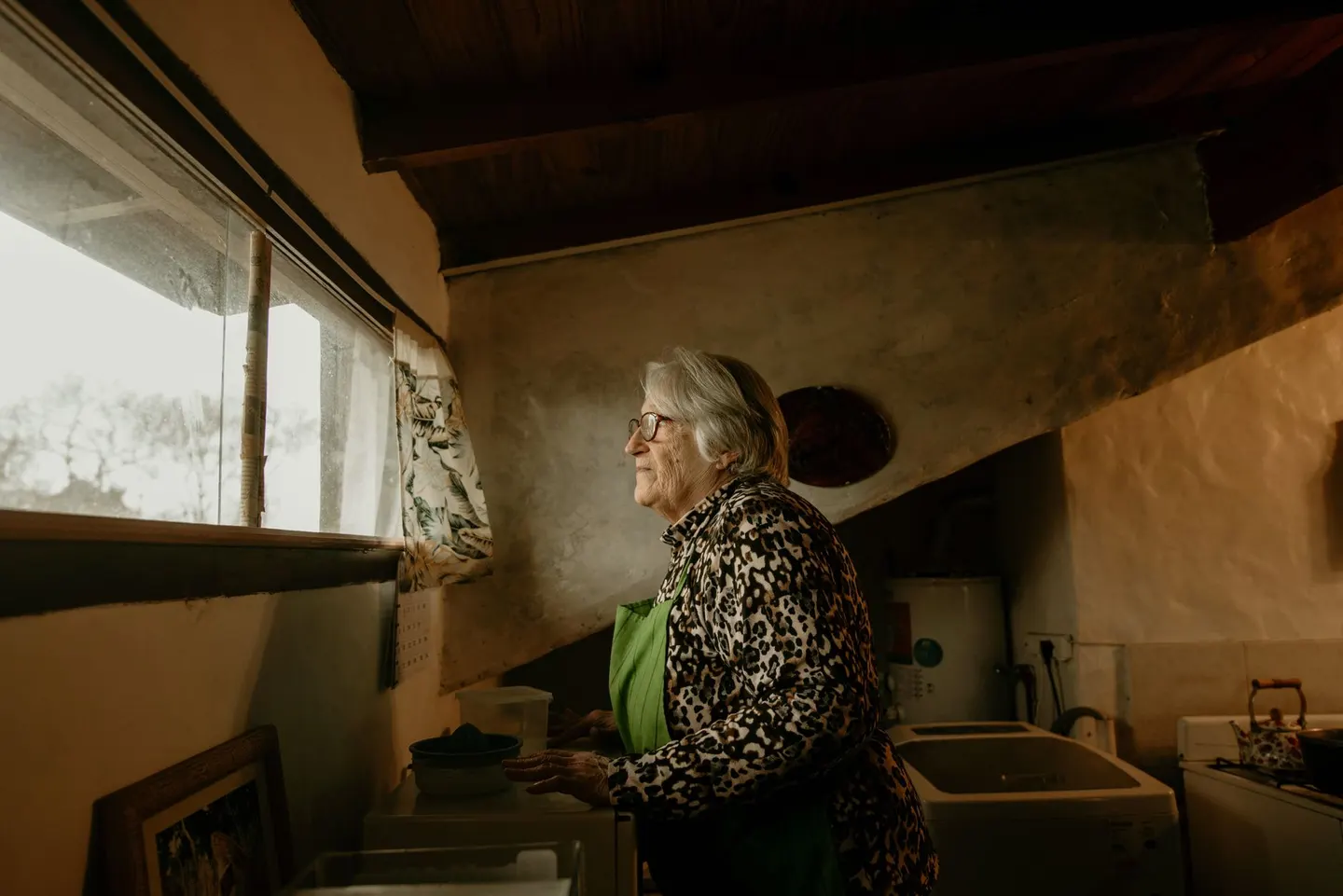
The home changes that help most for a parent with memory loss are the quiet ones: even, bright lighting with night lights on the path to the bathroom, strong color contrast where it matters (the toilet seat, the edge of a step, a grab bar against the wall), loose rugs and thresholds gone, a stove and water heater that cannot cause harm when a step is forgotten, and a bathroom that is safe to use alone. Skip big remodels that change the layout, gadgets that need learning, and busy patterns on the floor. This guide covers the house; for anything about your parent's condition, medication or what to expect, ask the occupational therapist or doctor.
Ready to talk to a certified aging-in-place remodeler? Start with a room-by-room walk-through and get matched with a remodeler serving your area.
Start with an assessment, not a shopping list
Memory loss changes over time, so the first step is a written evaluation, not a trip to the hardware store. Ask the doctor for an occupational therapy home evaluation: an occupational therapist (OT) visits, watches how your parent moves through the house, and writes specific recommendations. A whole-home safety assessment by a Certified Aging-in-Place Specialist (CAPS) covers the house side and turns the OT's list into a quoted plan. Plan the work in stages, the rooms your parent uses most first.
Lighting and contrast
Poor lighting is a common cause of falls at home, and shadows and glare are harder to read with memory loss. Aim for even light without dark corners: brighter bulbs, a lamp or switch reachable from the bed, motion-activated night lights along the route from bed to toilet, and contrasting switch plates.
Contrast does the work that memory used to. A toilet seat in a color that stands out from the bowl and floor, grab bars that contrast with the tile instead of matching it, and the edge of any step marked in a different tone all make the next move obvious. Keep floors one even tone from room to room; some people with memory loss read a dark mat or a sharp change in floor color as a step or a hole. Mirrors unsettle some people; ask the OT before adding or removing any.
Trip hazards and floors
Remove every loose rug, every cord across a walkway, and the clutter along the path to the bathroom. Look at each height change between rooms (the lip into the bathroom, the step down to the lanai, the strip between carpet and tile), bevel the small ones and have a remodeler remove the rest. Choose non-slip flooring that is matte rather than shiny, because glare on glossy tile reads as wet or as a change in level, and in Florida slick tile plus humidity is already a bad combination.
The kitchen: stove and water
The kitchen risks are heat and water. Automatic shut-off devices exist for electric and gas ranges, and an induction cooktop heats the pan rather than the surface. If the OT advises taking the stove out of daily use, a microwave with simple controls and a kettle that switches itself off cover most meals. Set the water heater lower and add anti-scald (thermostatic) valves at the sink and shower.
Keep everyday items visible and in the same place: glass-front cabinet doors, or a label with a word or a picture on each door. Put cleaning products, sharp tools and medications behind a locked cabinet door. Larger changes are on our kitchen modifications page.
Doors and exits
Leaving the house and getting lost is a real fear, and the answer is not to lock someone in: nobody should be unable to get out in a fire, and in Florida an evacuation order can come with hours of notice. Talk to the OT or doctor and the care team before changing how any exit works. Door chimes and alarms that alert you when an exterior door opens are the usual first step, with keys kept out of sight. A fenced yard and a bench by the front door give a safe place to go instead of a locked one.
Inside, the bathroom door lock should open from the outside, or come off. Keep that door open and the light on at night; a sign or picture on the door helps some people find it.
The bathroom
Bathrooms are where many falls happen, and that routine is the one most worth protecting. Grab bars at the toilet and in the shower, installed into studs or with proper anchors, in a contrasting color. A shower seat and a handheld shower head so bathing happens sitting down. A curbless shower with no edge to step over, a non-slip floor, a comfort-height toilet with a contrasting seat, an anti-scald valve. Ask the OT whether a walk-in tub or a seated shower fits; the tub means sitting inside while it fills and drains and learning a new routine, and the shower is often simpler.
Keep the layout familiar: what to skip
The house your parent knows is itself a safety feature. So skip the big rearrangement, the new bedroom in a different part of the house, and the repaint of every room. Keep the same bed on the same wall, the same chair facing the same window, the same route to the bathroom, and make the safety changes inside that layout. Skip gadgets that need learning, patterned flooring, glossy tile, and the total remodel done in one go. Change the house around the person, not the person around the house.
Who pays
Most families pay directly, and that is the fastest route: no pre-approval, your choice of contractor, work can start as soon as the quote is signed. Paying out of pocket explains the tools; get written quotes from more than one licensed and insured contractor and never pay in full up front. Original Medicare does not pay for home modifications, and some Medicare Advantage plans add only a small bathroom safety allowance; Medicare and Medicare Advantage has the detail. A long-term care insurance policy may cover modifications tied to the need for help with daily activities, with pre-approval and a clinician's documentation, so call the carrier before buying. State Medicaid waivers help some people who qualify, with rules that differ by state and waitlists.
Ready to talk to a certified aging-in-place remodeler? Describe the house and what has changed, and get matched with a remodeler serving your area.
Questions people ask
What home changes help most for a parent with memory loss?
Even, bright lighting with night lights on the path to the bathroom, strong color contrast where it matters (toilet seat, grab bars, the edge of a step), loose rugs and thresholds removed, a stove and water heater that cannot cause harm when a step is forgotten, and a bathroom with grab bars and a seated shower. Keep the layout the same.
Should I lock the doors so my parent cannot wander?
Talk to the occupational therapist or doctor and the rest of the care team first. Door chimes and alarms are the usual first step, and nobody should ever be locked inside a home, because the household still has to get out fast in a fire or a hurricane evacuation.
Is a walk-in tub a good idea for someone with dementia?
Ask the occupational therapist. A walk-in tub means sitting inside while it fills and drains and learning a new routine, which can be hard with memory loss. A curbless shower with a seat, a handheld shower head and grab bars is often the simpler routine.
Should I rearrange the house to make it safer?
As little as possible. Keep the bed, the chair and the route to the bathroom where they have always been, and make the safety changes inside that familiar layout. A big rearrangement can be more disorienting than the hazard it fixed.
Who pays for home modifications for dementia?
Most families pay directly. Original Medicare does not pay for home modifications; some Medicare Advantage plans include a small bathroom safety allowance; long-term care insurance may cover modifications with pre-approval and a clinician's documentation; and state Medicaid waivers help some people who qualify financially and medically.
Do we need a home assessment first?
Yes. An occupational therapy home evaluation looks at what your parent can do; a whole-home safety assessment by a Certified Aging-in-Place Specialist looks at the house. Either one gives you a written, prioritized list instead of guesses.
Free, no obligation
Tell us about the home. We match you with a certified aging-in-place remodeler.
A few questions about your project. We never charge homeowners, and we never sell your information.