Upgrades
Walk-In Tub Cost, Pros and Cons, and Who Pays for It (2026 Guide)
A walk-in tub costs $3,000 to $15,000 installed, premium models up to $25,000, and Medicare does not pay for one. The pros, the cons, and the alternatives.
Updated 2026-07-10. Reviewed against our editorial standards.
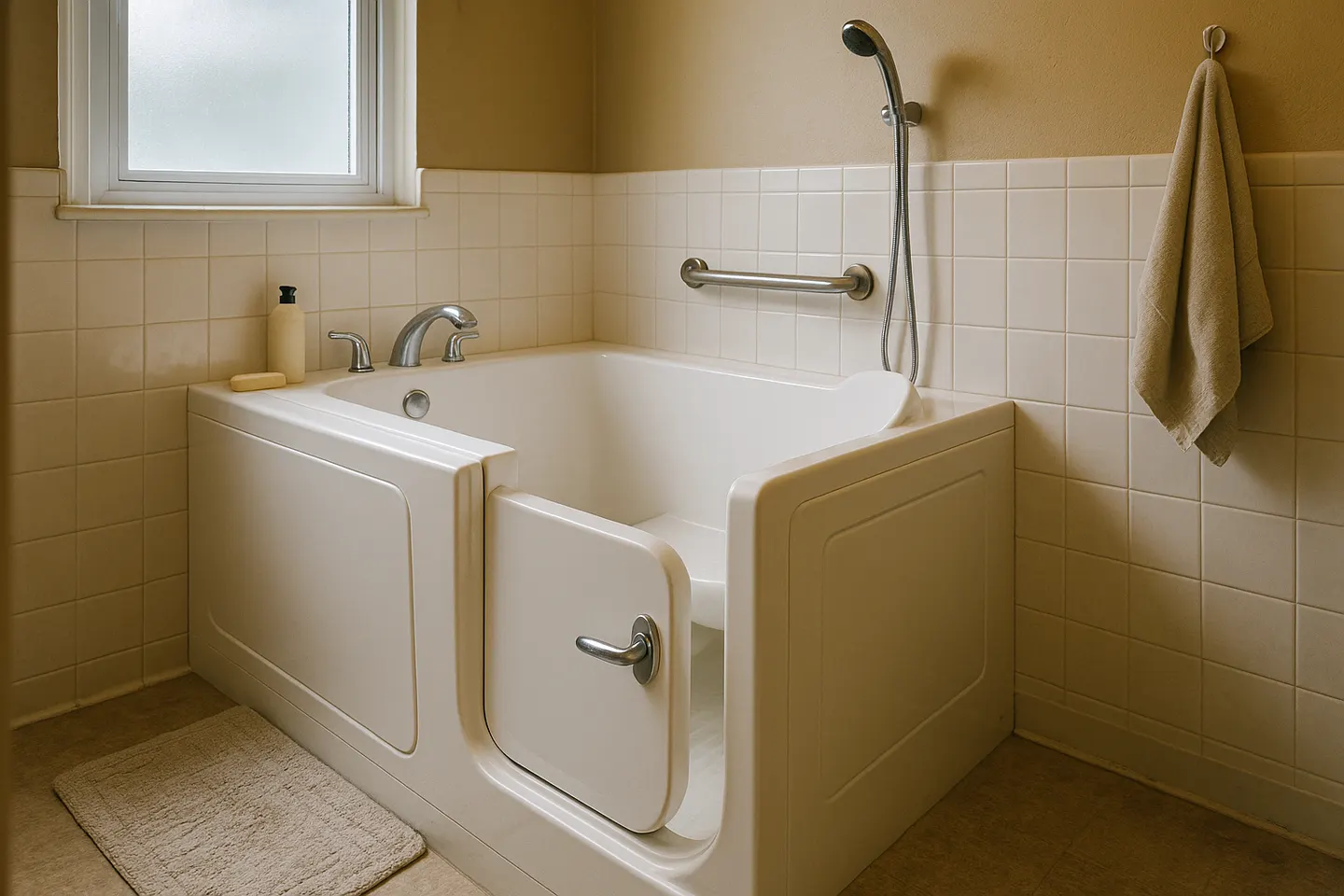
A walk-in tub is a deep bathtub with a watertight door in its side, so you step over a low threshold and sit on a built-in seat instead of climbing over a tub wall. Installed, most cost $3,000 to $15,000, with a national average near $5,000; premium models with jets and heated seats can reach $25,000. Original Medicare does not pay for one, and most families pay directly. These are national estimates from 2022 to 2026 secondary sources, so get local quotes.
Ready to talk to a certified aging-in-place remodeler? Tell us about your bathroom and a certified aging-in-place remodeler serving your area will reach out once matched: get matched for a walk-in tub.
What a walk-in tub is and who it is for
The tub is taller than a standard one and shorter in length, with a door that swings in or out, a molded seat at chair height, grab bars built into the walls, a hand-held shower, and often air or water jets. You open the door, step in, sit, close the door, fill the tub, bathe, drain it, and open the door once the water is gone.
It suits someone who wants a real soak, who can step over a low threshold and lower onto a seat, and who has the patience to sit while the tub fills and drains. It is a poor fit for someone who uses a wheelchair and cannot transfer onto the seat, who gets cold quickly, or who needs a caregiver in the shower with them. For those people a curbless or roll-in shower is usually the better answer. Ask the occupational therapist or doctor before you choose.
Pros and cons
| Pros | Cons |
|---|---|
| Low step-in instead of a tub wall | You sit in an empty tub while it fills, and in cooling water while it drains |
| Seated bathing with built-in grab bars | The door cannot open until the tub is empty |
| A soak, with jets on premium models | Often needs a larger water heater and a new electrical circuit |
| Usually fits a standard tub alcove | Costs more than many curbless shower conversions and does not work for a wheelchair |
| Hand-held shower for a quick rinse | Door seals need care; heavy sales pressure and misleading ads are common |
What a walk-in tub costs
| Option | National installed range (2022 to 2026 estimates) |
|---|---|
| Basic soaker walk-in tub, installed | $3,000 to $15,000, average near $5,000 |
| Premium tub with jets, heated seat, fast drain | Up to $25,000 |
| Curbless shower conversion, for comparison | $2,500 to $9,000 |
What moves the price: the tub model, whether plumbing has to move, a dedicated circuit for jets or heaters, a water heater upgrade so the tub fills warm, removing and disposing of the old tub, and the tile or surround around it. Get 3 written quotes. Be wary of an in-home sales visit that ends with a "today only" price; a fair quote is still fair next week.
Who pays for a walk-in tub
Most people pay for a walk-in tub themselves, and that is the normal path: no pre-approval and your choice of tub and installer. Savings, a home equity line, a reverse mortgage for homeowners 62 and over, contractor financing, and siblings splitting the bill are all common. See paying out of pocket.
The ads that say "Medicare pays for your walk-in tub" are not true. Here is what is:
- Original Medicare covers some durable medical equipment such as walkers and commodes when medically necessary. It does not cover walk-in tubs, grab bars or remodeling. Some Medicare Advantage plans add a bathroom safety allowance for small items; coverage of structural work is rare. Check the Summary of Benefits.
- Long-term care insurance often covers home modifications tied to help with daily activities, but walk-in tubs are not reliably covered. Call the carrier before buying.
- Medicaid waivers cover certain home modifications in some states when they are in the enrollee's care plan. Whether a tub qualifies depends on the plan. Waitlists exist.
- VA grants such as HISA pay for alterations a VA clinician prescribes as medically necessary.
- Tax deductions. A tub installed for medical reasons can count as a medical expense to the extent it does not add value to the home.
For the full story on "senior bathroom program" ads, see senior bathroom remodel programs.
How long it takes and what to expect
A straight swap into an existing tub alcove, with no plumbing moved, is usually a 1 or 2 day job once the tub is on site. A new electrical circuit, a larger water heater, or new tile adds days. Tub delivery can take weeks, so ask for the lead time in writing.
Before the installer leaves, have them fill the tub to the top and drain it while you watch, check that the door seals dry, and show the person who will use it how the latch works. Expect a permit where plumbing or electrical changes are involved.
Walk-in tub or curbless shower
For many families the honest comparison ends with a shower. A curbless shower is cheaper on average, quicker to use, easier for a caregiver to help with, and still works if a wheelchair arrives later. The tub wins for someone who loves a soak, has the balance to step in and the strength to stand from the seat, and bathes at a relaxed pace. Ask the occupational therapist to weigh in.
What to look for in an installer
Plumbing and electrical should be done by licensed trades. Ask for the Certified Aging-in-Place Specialist (CAPS) designation from the National Association of Home Builders; CAPS is training, not a license, so check the state license and insurance too. The quote should list the tub model, plumbing, electrical, water heater, removal and disposal as separate lines, with a payment schedule tied to milestones. Never pay in full up front. The manufacturer's tub warranty and the installer's labor warranty are separate; get both in writing. Our guide to choosing an aging-in-place remodeler covers the rest.
Florida notes
Florida's dense senior markets in Tampa Bay and South Florida draw heavy walk-in tub advertising, much of it leaning on Medicare claims that are not true. In Florida, plumbing and electrical require separate DBPR licenses; verify at the DBPR license search. Most Florida homes sit on a slab, so moving a drain means cutting concrete. Humidity means the tub surround and door seal need good ventilation to avoid mold.
Ready to talk to a certified aging-in-place remodeler? Tell us about your bathroom and your must-haves, and a certified aging-in-place remodeler serving your area will reach out once matched: get matched for a walk-in tub.
Questions people ask
Does Medicare pay for a walk-in tub?
Original Medicare does not. Some Medicare Advantage plans offer a small bathroom safety allowance for items like grab bars and shower stools, but a walk-in tub is a remodel, and coverage of structural work is rare. The plan's Summary of Benefits is the only authority.
How much does a walk-in tub cost installed?
National estimates from 2022 to 2026 sources put a walk-in tub at $3,000 to $15,000 installed, with an average near $5,000. Premium tubs with jets and heated seats can reach $25,000. Get local quotes.
How long does a walk-in tub take to fill and drain?
It depends on the model, your water pressure and your water heater, and you sit in the tub for both. Ask the installer to run a full fill and drain in your home before you accept the job.
Is a walk-in tub or a walk-in shower better for seniors?
A curbless shower is cheaper on average, quicker to use, and works with a wheelchair later. A walk-in tub wins for someone who wants to soak and can step over the low threshold and sit on the seat. Ask the occupational therapist which fits.
Can a walk-in tub fit where my bathtub is now?
Many are built to fit a standard tub alcove. New plumbing, a dedicated electrical circuit for jets or a heater, and a larger water heater are the usual extras that add cost.
Does long-term care insurance cover a walk-in tub?
Not reliably. Many policies have a home modification benefit tied to help with daily activities, but walk-in tubs are often excluded or capped. Call the carrier and get the answer in writing before you buy.
Free, no obligation
Tell us about the home. We match you with a certified aging-in-place remodeler.
A few questions about your project. We never charge homeowners, and we never sell your information.