Upgrades
Non-Slip Flooring for Seniors: What Works, What It Costs, Who Pays
Which floors keep an older adult from slipping, how to remove thresholds and rugs, what drives the price up or down, and who pays. A Florida-first guide.
Updated 2026-07-09. Reviewed against our editorial standards.
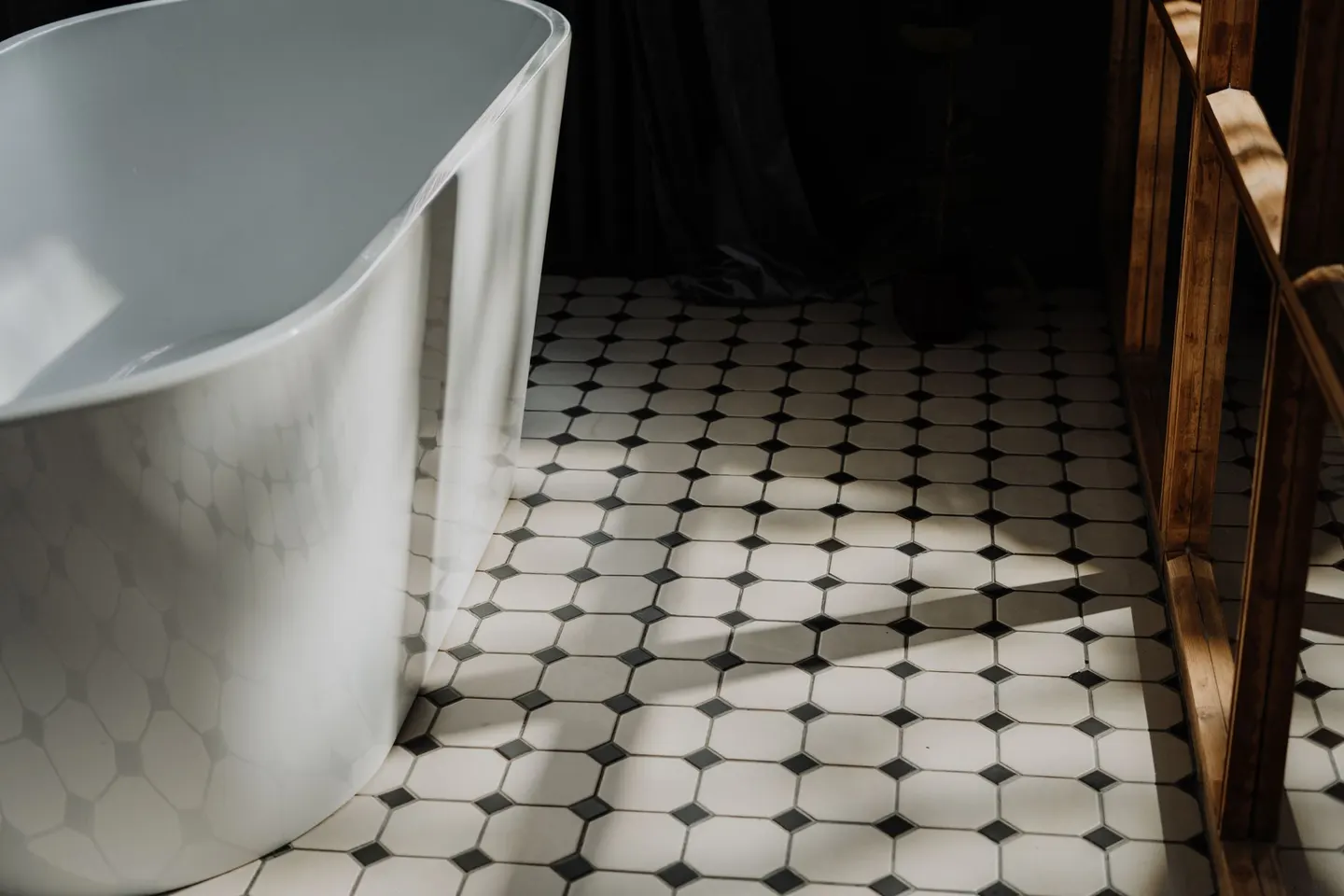
Non-slip flooring for an older adult means a flat, firm, matte surface that grips when wet, with no raised thresholds between rooms and no loose rugs anywhere. In practice that is textured porcelain tile rated for wet areas, slip-resistant sheet vinyl or vinyl plank, or rubber in a few spots, laid so one room flows into the next at the same height. It is one of the least dramatic aging-in-place upgrades and one of the most useful, because most falls at home involve wet floors, thresholds, stairs, poor lighting and reaching.
Ready to talk to a certified aging-in-place remodeler? Tell us about the home and a certified aging-in-place remodeler serving your area will reach out once matched: get matched for non-slip flooring.
What it is and who it is for
"Non-slip" is a goal, not a product. Three things make a floor safe for someone who is unsteady, uses a walker, or may one day use a wheelchair:
- Grip when wet. Tile and vinyl made for wet areas carry a slip-resistance rating on the spec sheet (often listed as DCOF). Ask to see the rating for the exact product. Matte and textured finishes grip; polished and high-gloss finishes do not.
- No height changes. A threshold strip, a step down into a sunken room, or the lip of a shower pan is a trip point. The target is a flush transition, where both floors finish at the same height.
- Firm and even. Thick carpet and soft pads catch walker legs and swallow wheelchair wheels. Loose rugs slide.
This upgrade is for anyone who has had a fall or a near fall, shuffles or drags a foot, uses a cane, walker or wheelchair, or has low vision (one calm floor color with a contrasting edge at any step is easier to read than a busy pattern).
Rooms in order of priority
- Bathroom, where many falls happen. Pair the floor with a curbless shower and grab bars; see bathroom safety remodels.
- Kitchen and laundry, for spills and standing water.
- Entry and the garage step, for rain, pool water and sand tracked in.
- The path from bed to bathroom at night.
What it costs and what drives the price
No trustworthy national range exists for this upgrade, so we give drivers rather than dollars. Get 3 written local quotes with the same scope.
| Driver | Cheaper end | Expensive end |
|---|---|---|
| Material | Sheet vinyl, vinyl plank | Porcelain tile, rubber, cork |
| What is under it | Sound subfloor, flat slab | Cracked slab, rotten wood subfloor, leveling needed |
| Removal | Carpet or old vinyl pulled up | Old ceramic tile chiseled off a slab (slow and dusty) |
| Transitions | Floors already at similar heights | Sunken rooms or a step that must be built up |
| Area | One bathroom | The whole main floor |
| Wet-room detailing | Floor only | Floor plus waterproofing under a curbless shower |
Tile removal is the biggest surprise on slab homes: the old tile is bonded to concrete and comes off in pieces. Floating vinyl plank over flat existing tile skips demolition but raises the floor, so each doorway has to be planned so no new threshold appears.
Who pays
Most families pay for flooring directly, with real advantages: no pre-approval, your choice of product, and work starts as soon as material arrives. Our guide to paying out of pocket covers savings, a home equity line, a reverse mortgage for homeowners 62 and over, and splitting the cost among siblings with a written agreement.
The other channels, honestly:
- Original Medicare does not pay for flooring or any remodeling. Some Medicare Advantage plans add a bathroom safety allowance for items like grab bars and shower stools; a new floor is rarely included. See Medicare and Medicare Advantage.
- Long-term care insurance often has a home modification benefit tied to the insured's need for help with daily activities, with pre-approval, a clinician's documentation and usually a dollar cap. See long-term care insurance.
- Medicaid waivers pay for certain home modifications in some states for people who qualify financially and medically. Waitlists exist. See Medicaid waivers.
- Veterans: the VA's HISA grant pays for medically necessary alterations prescribed by a VA clinician. See VA grants.
- Taxes: a modification made for medical reasons can be a deductible medical expense under IRS Publication 502, only to the extent it does not add value to the home. New flooring often adds value, so ask a tax preparer and keep the doctor's letter and receipts. See tax deductions.
How long it takes and what to expect
Varies by home and region. A single bathroom floor is usually a few days, including drying time for mortar or adhesive. Tile removal adds days and a great deal of dust; ask how the crew will contain it, and plan for the person living there to stay out of those rooms. Toilets and vanities may come out and go back in, which is where plumbing licensing matters. Ask for the finished floor height at every doorway in writing before work starts. That one question prevents most new thresholds.
What to look for in a remodeler
Look for a Certified Aging-in-Place Specialist (CAPS), a designation run by the National Association of Home Builders and created with AARP. CAPS is training, not a license, so also confirm the state license and insurance. A good remodeler for this work talks about slip ratings, transitions and the path from bed to bathroom before colors. Tie payments to milestones and never pay in full up front. Our guide on how to choose an aging-in-place remodeler has the full checklist. Thresholds at exterior doors overlap with wheelchair ramps and entries. If you are not sure flooring is the first thing to fix, start with a whole-home safety assessment.
Florida notes
Humidity, rain and pool water mean Florida floors are wet more often than most, and the polished tile common in Florida homes is slick when damp. Most Florida homes sit on a concrete slab, so tile removal is harder and a built-up transition is the usual fix for a sunken room. Flooring on its own is generally non-structural work, but once a toilet or vanity is pulled, or a subfloor is repaired, the trade needs the right Florida DBPR license (plumbing is a separate license from the general contractor's). Check any license at the DBPR license search, and see our Florida page.
Ready to talk to a certified aging-in-place remodeler? Describe the rooms that worry you and a certified aging-in-place remodeler serving your area will reach out once matched: get matched for non-slip flooring.
Questions people ask
What is the safest flooring for seniors?
Matte, textured porcelain tile rated for wet areas and slip-resistant vinyl are the usual choices. Both are flat, firm, easy to clean, and work with walkers and wheelchairs. Avoid polished tile, thick carpet and loose rugs.
Is vinyl plank flooring slip resistant?
Many vinyl plank and sheet vinyl products have a textured, low-gloss surface made for wet rooms, but not all of them. Ask for the slip-resistance rating on the spec sheet and choose a product marked for bathrooms or wet areas.
Should I remove area rugs for an elderly parent?
Yes. Loose rugs and runners are among the most common trip hazards in a home. If a rug has to stay for warmth or comfort, it needs a non-slip pad underneath and edges that lie completely flat.
Does Medicare pay for non-slip flooring?
Original Medicare does not pay for flooring or any other home remodeling. Some Medicare Advantage plans offer a small bathroom safety allowance, but structural changes like flooring are rarely included. Check the plan's Summary of Benefits.
Can non-slip flooring be installed over existing tile?
Sometimes. Certain vinyl products can go over flat, sound tile, which avoids the dust and labor of removal. The trade-off is a slightly higher floor, so the remodeler must plan the transition to the next room so no new threshold is created.
Free, no obligation
Tell us about the home. We match you with a certified aging-in-place remodeler.
A few questions about your project. We never charge homeowners, and we never sell your information.