Upgrades
Home Elevators and Lifts: Elevator vs Platform Lift vs Stair Lift
Residential elevators, platform lifts and stair lifts compared: who each is for, space, power, permits and maintenance, what drives the cost, and who pays.
Updated 2026-07-07. Reviewed against our editorial standards.
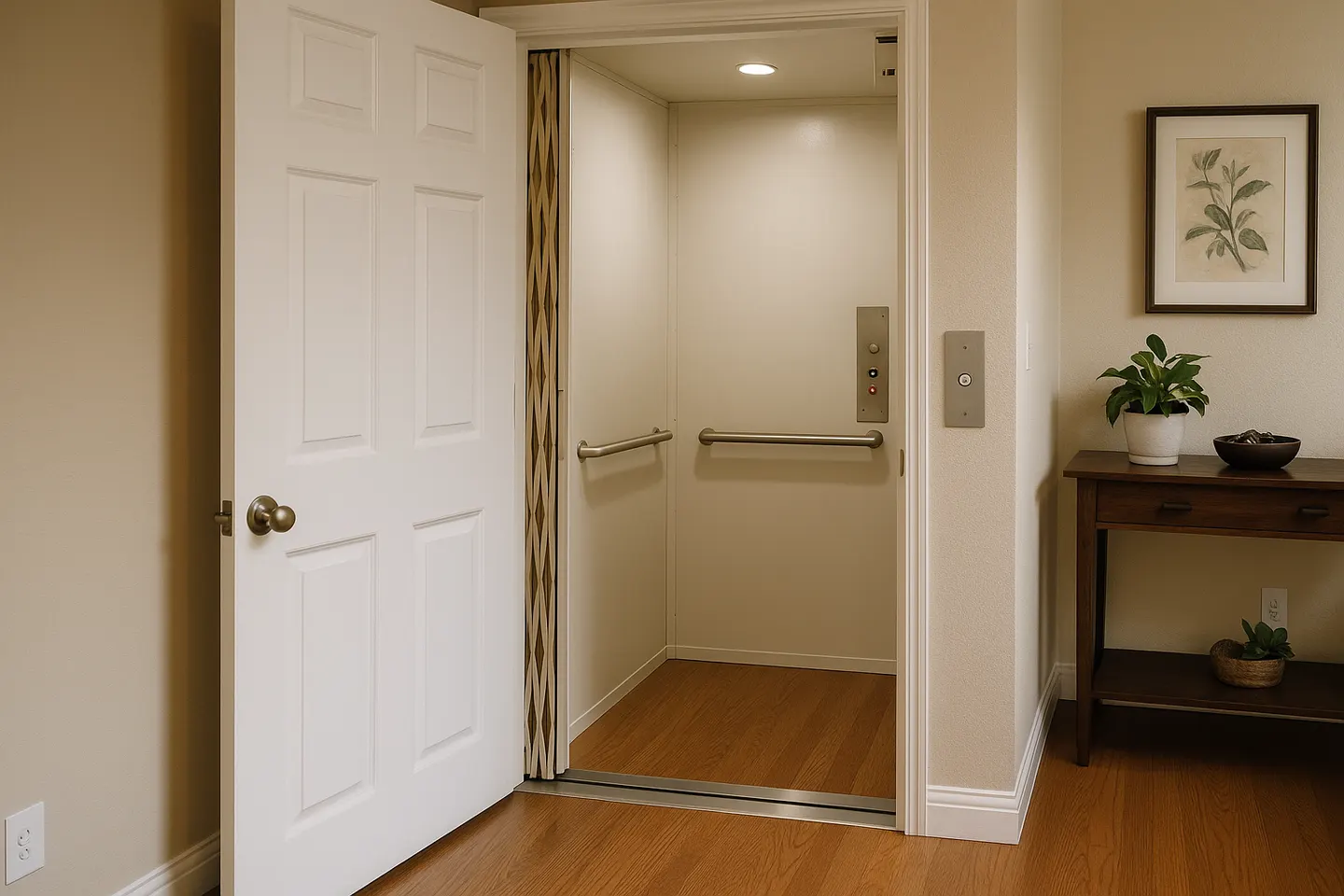
A residential elevator, a vertical platform lift and a stair lift all move a person who cannot manage stairs from one level to another, at very different prices and footprints. A stair lift is a seat on a rail bolted to the stair treads, the cheapest and fastest, for someone who can still sit and stand on their own. A vertical platform lift raises a wheelchair a short distance on an open or partly enclosed platform, usually at an entry or between a garage and a raised main floor. A residential elevator is an enclosed car in a shaft between full floors, the most expensive: a five-figure project once the shaft, electrical, permits and unit are counted. Platform lifts cost a fraction of an elevator.
Ready to talk to a certified aging-in-place remodeler? Tell us about the levels in the home and a certified aging-in-place remodeler serving your area will reach out once matched: get matched for a home elevator or lift.
What each one is and who it is for
| Stair lift | Vertical platform lift | Residential elevator | |
|---|---|---|---|
| What moves | A seated person | A wheelchair and rider | An enclosed car with room for a wheelchair |
| Travel | One staircase | A short rise: a porch, a split level, garage to main floor | Full floor to floor, 2 or more stops |
| Space | The stairs themselves | A footprint below, a landing above | Stacked space on every level, plus a pit or ramp |
| Needs | A nearby outlet | A dedicated circuit, a level pad | Shaft construction, a dedicated circuit, structural work |
| Best for | Can transfer on and off a seat | Wheelchair user, short rise | Wheelchair user, multi-story home |
A stair lift is covered on our stair lifts page, with the installed cost range. If the person can safely sit, stand and walk a few steps at each end, start there.
A vertical platform lift (also called a porch lift or wheelchair lift) is the answer when the problem is a few feet of rise, not a whole floor: a raised entry where a ramp would be too long (ramps need roughly 1 foot of length per inch of rise under ADA guidance; see wheelchair ramps), a split-level landing, or a garage below a raised living floor.
A residential elevator suits a two-story home where the person uses a wheelchair, or where the family is staying for decades. Designs range from a traditional car in a built shaft to newer shaftless and through-the-floor units with smaller footprints. Or compare a main-floor bedroom and bath, the other way to take the stairs out of daily life.
What it costs and what drives the price
We do not give dollar ranges for elevators and platform lifts because trustworthy national figures are not available; get 3 written local quotes. What moves the price:
- Travel height and stops. More floors and doors cost more.
- Construction around it. An elevator needs a shaft through the floors (often closet over closet), a pit or ramped entry, and sometimes a machine space. A platform lift needs a level pad and a landing gate. A stair lift needs neither.
- Electrical. Elevators and most platform lifts need a dedicated circuit run by a licensed electrician. Battery backup is worth paying for in storm country.
- Permits and inspections. Building and electrical permits, then inspections.
- Maintenance. All 3 need periodic service; an elevator typically carries an annual service contract.
Who pays
Elevators and lifts are almost always paid for directly by the family, often from home equity, and that is the normal path: no pre-approval, your choice of installer and unit, your timeline. The paying out of pocket guide covers home equity lines, cash-out refinancing, reverse mortgages for homeowners 62 and over, and contractor financing.
The other channels, honestly:
- Original Medicare does not pay for elevators, lifts or stair lifts, and Medicare Advantage structural benefits are rare. See Medicare and Medicare Advantage.
- Long-term care insurance home modification benefits sometimes name stair lifts and are tied to help with daily activities, with pre-approval and a dollar cap that is unlikely to reach an elevator. See long-term care insurance.
- Veterans with a qualifying service-connected disability may be eligible for the VA's Specially Adapted Housing or Special Home Adaptation grants, with much higher limits: up to $126,526 for SAH and $25,350 for SHA in fiscal year 2026 (va.gov); HISA itself covers medically necessary alterations prescribed by a VA clinician. See VA grants.
- Taxes: IRS Publication 502 allows a medical home modification as a deductible expense only to the extent it does not add value to the home. Keep the doctor's letter and receipts; see tax deductions.
How long it takes and what to expect
Varies by home and region. A stair lift goes in within a day. A platform lift takes a few days once the pad and circuit are ready. An elevator is weeks of construction (framing the shaft, cutting floors, electrical, drywall) plus the lead time to order the unit, often the longest part; ask for it in writing. Ask about the gap between the hoistway door and the car door; small gaps matter where grandchildren visit, and newer units are built to close them.
What to look for in a remodeler
Two trades are involved: a licensed general or residential contractor for the shaft, structural and electrical work, and the elevator or lift installer, who in many states is separately licensed or registered. Look for a Certified Aging-in-Place Specialist (CAPS) on the remodeling side; CAPS is National Association of Home Builders training, not a license, so confirm license and insurance too. A good remodeler raises the stair lift and main-floor suite alternatives before selling you an elevator. Tie payments to milestones and never pay in full up front. Our guide on how to choose an aging-in-place remodeler has the full checklist, and a whole-home safety assessment is the right first step if you are not sure which of the 3 fits.
Florida notes
Florida's two-story homes and elevated coastal homes (living space above a garage) are where elevators and platform lifts come up most. Hurricane-season outages make battery backup close to essential, and outdoor platform lifts need weather-rated units for humidity and salt air. The contractor needs a Florida DBPR general, building or residential license with electrical under its own license, and Florida regulates elevator installers through the DBPR as well; residential elevators generally need a local building permit and inspection, under rules that differ from commercial elevators. Check every license at the DBPR license search, and see our Florida page.
Ready to talk to a certified aging-in-place remodeler? Describe the levels and who needs to move between them, and a certified aging-in-place remodeler serving your area will reach out once matched: get matched for a home elevator or lift.
Questions people ask
How much does a home elevator cost?
A residential elevator is a five-figure project once the shaft, electrical work, permits and the unit itself are counted, and the total varies widely by home and region. A vertical platform lift or a stair lift usually costs less. Get written local quotes for all 3 before deciding.
What is the difference between a home elevator and a vertical platform lift?
An elevator is an enclosed car that travels inside a shaft between full floors. A vertical platform lift is an open or partly enclosed platform that raises a wheelchair a shorter distance, often from a driveway to a porch or between a garage and a raised main floor.
Does a home elevator need a permit?
Yes. Elevators and platform lifts need building and electrical permits from the local building department, and inspections before use. A licensed installer pulls them.
Can a home elevator run during a power outage?
Many residential elevators and platform lifts offer a battery backup that lowers the car to a floor and opens the door when power fails. Ask for it by name in the quote. It matters most in storm-prone areas.
Is a stair lift or an elevator better for a wheelchair user?
A stair lift carries a seated person, not a wheelchair, so the user has to transfer on and off at each end and needs a second chair upstairs. If the person cannot transfer safely, an elevator or platform lift is the answer.
Does Medicare pay for a home elevator or lift?
Original Medicare does not pay for elevators, platform lifts or stair lifts. Veterans with qualifying service-connected disabilities may have VA grant options, and some long-term care insurance policies include a capped home modification benefit. Most families pay directly.
Free, no obligation
Tell us about the home. We match you with a certified aging-in-place remodeler.
A few questions about your project. We never charge homeowners, and we never sell your information.