Upgrades
Grab Bars and Railings: Placement, Installation Cost, Who Pays (2026)
Grab bars cost tens of dollars each and a few hundred to install. Where they go, why towel bars are not grab bars, and why stairs need a rail on both sides.
Updated 2026-07-06. Reviewed against our editorial standards.
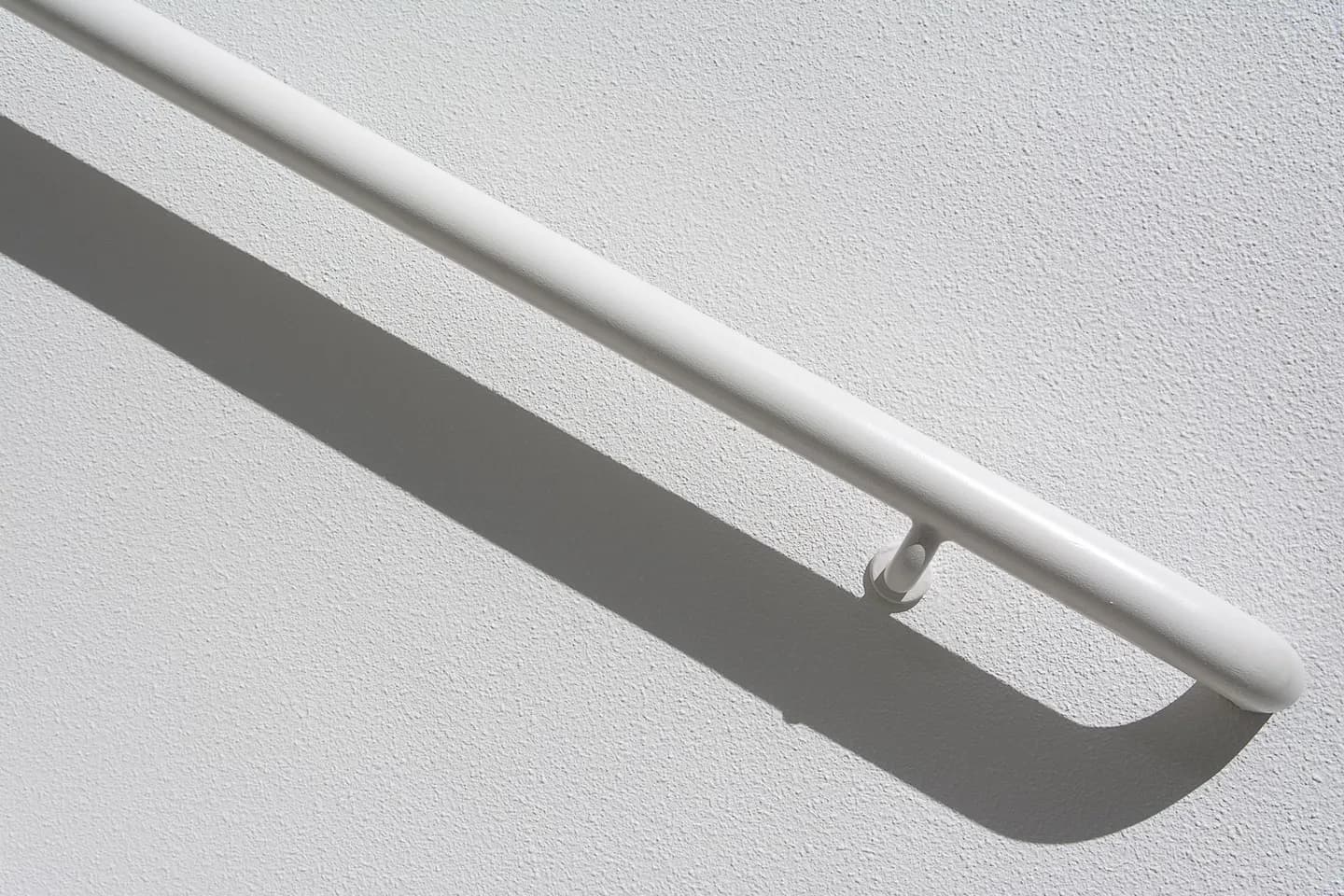
Grab bars are metal bars anchored into wall studs, or with anchors rated for the load, so they hold a falling adult's full weight; railings do the same job along stairs and hallways. The bars themselves cost tens of dollars each, and professional installation for a bathroom typically runs a few hundred dollars, which makes this the cheapest aging-in-place upgrade with the biggest effect on fall risk. Towel bars and suction-cup bars are not grab bars. Tile, wall type and the number of bars change the price, so get local quotes.
Ready to talk to a certified aging-in-place remodeler? Tell us which rooms need bars and a certified aging-in-place remodeler serving your area will reach out once matched: get matched for grab bars and railings.
What grab bars and railings are and who they are for
Falls are the leading cause of injury among older adults, and most falls at home involve wet floors, thresholds, stairs, poor lighting and reaching. A grab bar turns a slip into a stumble. It is a textured metal bar, usually stainless steel, bolted through the wall into the framing behind it or into anchors designed to carry a person's weight.
They are for anyone unsteady on their feet, anyone recovering from surgery or a fall, anyone who uses a walker, and anyone past the age where a stumble is just a stumble. Most people wait until something happens; the better order is bars first, because they are cheap and quick. If you are reading this after a fall, our after a fall guide covers this week.
Where grab bars go
Shower and tub. A vertical bar at the entry where you step in or over, a horizontal bar along the back wall at roughly waist height for the person using it, and a bar within reach of the controls. In a tub, an angled bar along the long wall helps with sitting down and standing up.
Toilet. A horizontal bar on the wall beside the toilet, where the person pushes up. If there is no side wall, a flip-up bar mounted behind the toilet swings down when needed. A comfort-height toilet makes the bar work less hard; see bathroom safety remodels.
Everywhere else. Beside the bed, at the garage or entry steps, along a long hallway as a continuous rail, and at the step down to the lanai or patio. Mount bars for the person's reach and weaker side. An occupational therapist can mark the spots with tape in a short visit, one reason a whole-home safety assessment pays for itself.
Towel bars are not grab bars
A towel bar is decoration. It is held to drywall with small anchors or short screws and will tear out of the wall under a falling adult. Suction-cup bars release without warning on wet tile. A towel bar grabbed in a panic becomes a fall with the bar still in hand.
A grab bar is anchored into studs or with anchors rated for the load, and it is tested by pulling on it hard before the installer leaves. Some grab bars are styled as towel bars, shelves or toilet paper holders so the bathroom does not look like a hospital; those are fine. The difference is the anchoring behind the wall, not the look.
Railings on both sides of stairs
Most houses have 1 handrail. An older adult needs 2, because the weaker side changes when you turn around at the top, and a rail on each side lets a person steady with both hands.
A good rail is round enough to wrap a hand around, continuous from top to bottom, returns to the wall at the ends so a sleeve cannot catch, and extends past the first and last step. The same rules apply to the 2 or 3 steps at the front door, the garage and the lanai. Light the stairs and mark the edge of each tread; see non-slip flooring.
What grab bars and railings cost
| Item | What to expect |
|---|---|
| Grab bar hardware | Tens of dollars per bar |
| Professional installation, 1 bathroom, several bars | Typically a few hundred dollars (about $85 to $300 per bar installed, Fixr, 2025) |
| Second stair rail | Varies by home; a new rail, brackets and sometimes wall backing |
| Bars added during a shower remodel | Cheapest moment, because blocking goes in behind the tile |
What moves the price: tile versus drywall, a fiberglass or acrylic surround, whether there is framing where the bar needs to go, the number of bars, and electrical in the wall. There is no reliable national installed range, so get 3 quotes.
Who pays for grab bars
Almost everyone pays for grab bars directly, and at this price that is the sensible move. See paying out of pocket.
- Original Medicare does not cover grab bars. Medicare Advantage sometimes does: AARP, citing KFF data, reports in 2026, 21% of individual Medicare Advantage plans and 47% of special needs plans offer bathroom safety devices (KFF), often as an allowance, with one commonly cited allowance of up to $500 a year for items like grab bars and shower stools. Whether installation labor is included varies by plan. The Summary of Benefits is the only authority.
- Long-term care insurance commonly lists grab bars in its home modification benefit, usually with pre-approval.
- Medicaid waivers, VA grants and some local Area Agency on Aging or Rebuilding Together programs install grab bars for people who qualify, often with waitlists.
- Tax deductions. Grab bars installed for medical reasons can count as a medical expense if you itemize.
How long it takes and what to look for
A bathroom's worth of bars is usually a single visit of a few hours. The installer finds the studs, drills tile with the right bit, seals every hole against water, and pulls hard on each bar. Rails on a staircase take about a day.
Grab bars are often handyman work. In Florida, unlicensed handyman work is limited to non-structural tasks, and anything that opens a wall for backing or touches wiring should go to a licensed contractor; verify licenses at the DBPR license search. Ask for the Certified Aging-in-Place Specialist (CAPS) designation from the National Association of Home Builders, ask what anchors they use in tile and fiberglass, and walk away from anyone who reaches for drywall anchors. Our guide to choosing an aging-in-place remodeler covers the rest.
Florida notes
Humidity keeps Florida bathroom floors damp longer. Stainless resists corrosion in humid and coastal air. Many Florida homes have fiberglass or acrylic tub and shower surrounds, which need backing or special anchors, and most are single-story, so the stairs that matter are the entry, garage and lanai steps.
Ready to talk to a certified aging-in-place remodeler? Tell us about the bathroom and the stairs, and a certified aging-in-place remodeler serving your area will reach out once matched: get matched for grab bars and railings.
Questions people ask
How much does it cost to install grab bars?
The bars themselves cost tens of dollars each. Professional installation for a bathroom is usually a few hundred dollars, more when the walls are tile over hollow framing or a fiberglass surround needs special backing. Get local quotes.
Can a towel bar be used as a grab bar?
No. Towel bars are screwed into drywall with light anchors and pull out under a falling adult's weight. A grab bar is anchored into studs or with anchors rated for the load. Some rated grab bars are styled to look like towel bars, and those are fine.
Where should grab bars go in a shower?
A vertical bar where you step in, a horizontal bar along the back wall at about waist height for the person using it, and one near the controls. Beside the toilet, a bar on the wall or a flip-up bar if there is no wall. An occupational therapist can mark the exact spots.
Does Medicare cover grab bars?
Original Medicare does not. Some Medicare Advantage plans include a bathroom safety allowance, often cited as up to $500 a year, that can cover grab bars and shower stools. The plan's Summary of Benefits is the only authority.
Do stairs need a handrail on both sides?
For an older adult, yes. The weaker side changes direction when you turn around, so a rail on each side gives a firm grip both going up and coming down. Rails should extend past the top and bottom step.
Can grab bars be installed on tile or a fiberglass shower?
Yes. Tile needs the right drill bit, anchors rated for grab bars, and sealed holes. Fiberglass surrounds need backing behind the wall or anchors made for hollow walls, and this is where do-it-yourself installs most often fail.
Free, no obligation
Tell us about the home. We match you with a certified aging-in-place remodeler.
A few questions about your project. We never charge homeowners, and we never sell your information.