Guides
Wheelchair Accessible Home Remodel: What to Change, in What Order
Make a home wheelchair accessible in this order: step-free entry, 32 to 36 inch doorways, roll-in shower, turning room, kitchen, flooring. With cost ranges.
Updated 2026-09-23. Reviewed against our editorial standards.
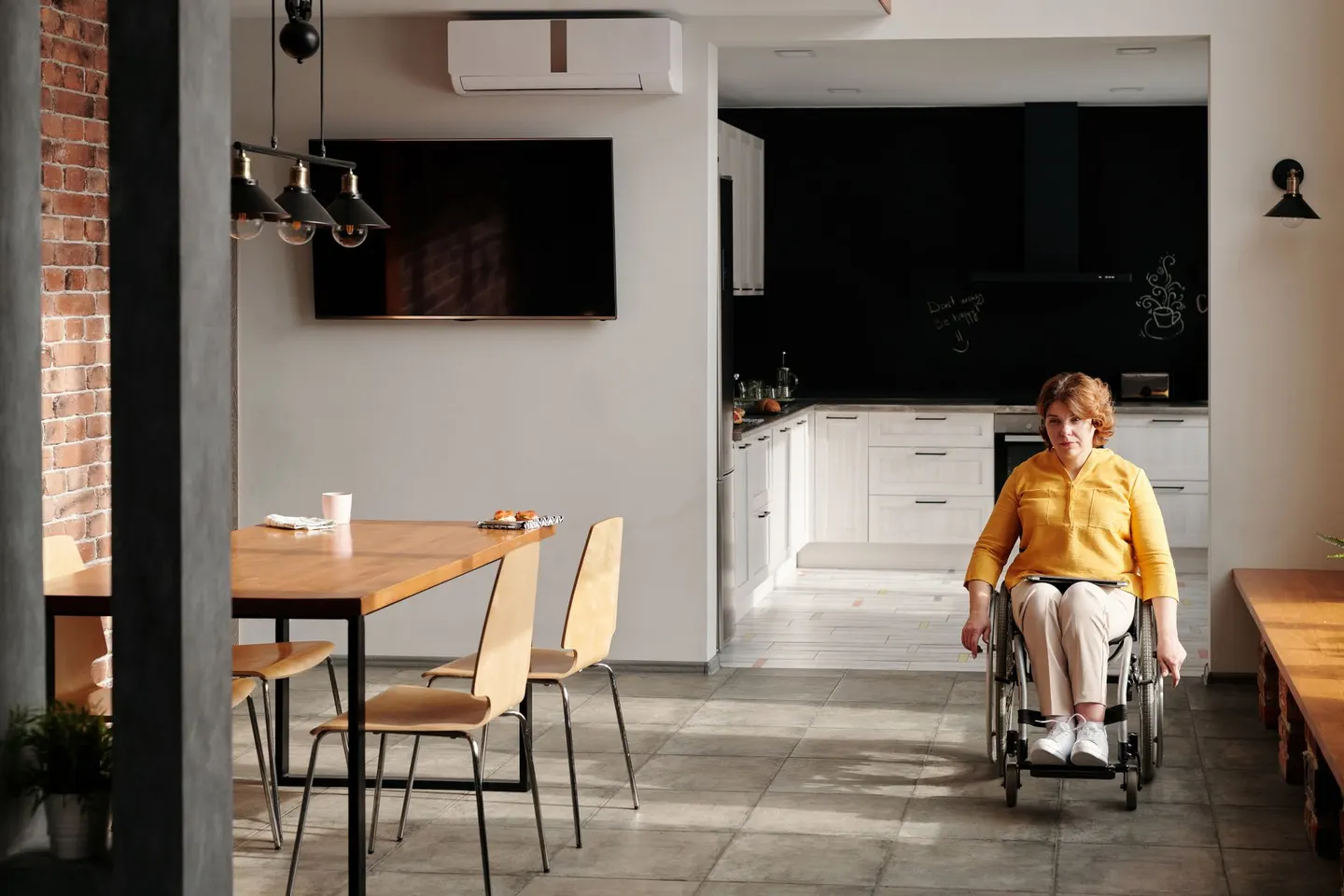
Make a home wheelchair accessible in this order: a step-free entry (a ramp or a fixed threshold), then every doorway and hallway on the route at a 32 to 36 inch clear opening, then the bathroom (a roll-in shower, room to turn, grab bars), then the bedroom, the kitchen and the floors. In national estimates a ramp runs $875 to $5,000, a roll-in shower conversion $2,500 to $9,000, and a full accessible bathroom $6,600 to $28,000; widening a doorway is priced per door. The total varies by home and region, so get local quotes.
Ready to talk to a certified aging-in-place remodeler? Describe the house and the chair, and get matched with a remodeler serving your area.
1. The entry
Nothing else matters until the chair can get in. Pick the door with the lowest rise; the garage or patio door is often lower than the front. A single step or a raised threshold may be solved with a threshold ramp or by rebuilding the sill flat. More rise needs a ramp: under ADA guidance about 1 foot of length for every inch of rise, with a flat landing at the top and at any turn. Ramps run $875 to $5,000 installed in national estimates, average near $1,100 for a short wood or aluminum ramp; length and material drive the price. Where a ramp would be too long for the yard, a vertical platform lift (a small open elevator for a wheelchair) costs a fraction of a residential elevator; see home elevators and lifts. Florida's hurricane-rated doors are heavy to pull from a seated position; ask about a power opener.
2. Doorways and hallways: the 32 to 36 inch rule
A wheelchair needs a clear opening of 32 to 36 inches. Clear opening means the space you can actually pass through with the door open, not the width printed on the door, so measure from the door face to the stop. Many bedroom and bathroom doors are narrower.
Cheap first steps: offset hinges (also called swing-clear hinges), which swing the door out of the opening; removing the door and its stop; a pocket door where the wall allows. Widening the frame itself typically costs a few hundred to a few thousand dollars per door, depending on whether the wall is load-bearing and whether electrical runs through it. Widened doorways and hallways covers what a remodeler looks for. Do every door on the route, including the one to the patio. Hallways need width to pass and room to turn at the end; removing a hall closet is sometimes cheaper than moving a wall.
3. Turning room
A chair needs to turn fully, in a circle, without hitting anything, in the bathroom, the bedroom and wherever a hallway ends. No single number fits every chair and every house, which is why a Certified Aging-in-Place Specialist or an occupational therapist should measure with the actual chair. The cheap way to find space is to take things out: a vanity replaced by a wall-hung sink, a bathroom door rehung to swing out, a dresser removed. Clear floor matters more than square footage.
4. The bathroom: roll-in shower
A roll-in shower is a curbless shower with no lip at all, floor sloped gently to a drain, so a shower chair or wheelchair rolls straight in. The conversion from a tub runs $2,500 to $9,000 in national estimates. Add a fold-down seat, a handheld shower head on a slide bar, grab bars on the walls you will reach for, and a non-slip floor. The toilet needs clear floor beside it for a transfer and a grab bar on the wall side. A sink the chair rolls under, pipes insulated, finishes it.
A full accessible bathroom remodel runs $6,600 to $28,000 nationally, average near $11,000; Fixr's national average for a core package (roll-in shower, grab bars, non-slip floor, comfort-height toilet and sink) is about $9,500. Estimates from 2022 to 2026 sources; get local quotes. Widen the bathroom door at the same time, while the walls are open.
5. The kitchen
What a seated cook needs: a section of counter to roll under, a sink with knee space and insulated pipes, a cooktop with front controls, a wall oven set low, a microwave at counter height, pull-out shelves in the base cabinets, and a lever faucet. The cheap end is hardware and shelving; the expensive end is new cabinets and moved plumbing. Kitchen modifications explains the tradeoffs.
6. Flooring
Wheels want a firm, smooth, non-slip surface with no height changes. Luxury vinyl plank, textured tile and sealed wood work; thick carpet, loose rugs and raised thresholds do not. Every transition between rooms should be flush or beveled. Do the floors last in each room, after the walls and doors. Non-slip flooring compares the options.
Who pays
Most of this work is paid directly by the homeowner or family: no pre-approval, your choice of contractor, work can start now. Paying out of pocket covers savings, a home equity line and splitting among siblings with a written agreement. Always 3 written quotes, licensed and insured, payments tied to milestones.
Original Medicare does not pay for ramps, widened doors or showers. For a veteran, the VA's HISA grant pays for medically necessary alterations prescribed by a VA clinician, with a lifetime cap of $6,800 for service-connected conditions and $2,000 otherwise (va.gov); the SAH and SHA grants go much higher for qualifying service-connected disabilities (up to $126,526 for SAH and $25,350 for SHA in fiscal year 2026, va.gov). See VA grants. State Medicaid waivers pay for some modifications in some states for people who qualify, with waitlists. Long-term care insurance may cover ramps, widened doorways and showers with pre-approval.
Ready to talk to a certified aging-in-place remodeler? Start with the doors and the entry, and get matched with a remodeler serving your area.
Questions people ask
How wide does a doorway need to be for a wheelchair?
The usual target is a 32 to 36 inch clear opening, measured with the door open from the door face to the stop, not the width printed on the door. Offset hinges gain a little; widening the frame is a remodeler's job.
How much does it cost to make a house wheelchair accessible?
It varies by home. National estimates: an entrance ramp $875 to $5,000, a roll-in shower conversion $2,500 to $9,000, a full accessible bathroom $6,600 to $28,000. Doorways are priced per door and depend on the wall. Get 3 local quotes.
What is a roll-in shower?
A shower with no curb or lip at all, with the floor sloped gently to a drain, so a wheelchair or shower chair rolls straight in. It usually includes a fold-down seat, a handheld shower head and grab bars.
What order should wheelchair accessibility work happen in?
Entry first, then doorways and hallways, then turning room, then the bathroom, then the bedroom and kitchen, with flooring last in each room. The chair has to get in and through the doors before anything else is usable.
How long does a wheelchair ramp need to be?
Under ADA guidance, about 1 foot of ramp for every inch of rise, plus a flat landing at the top and at any turn. A tall porch can need a long ramp, which is when a vertical platform lift is worth pricing.
Does Medicare pay to make a house wheelchair accessible?
Original Medicare does not pay for ramps, widened doors or showers; it covers some durable medical equipment when medically necessary. Veterans may qualify for VA HISA, SAH or SHA grants, and some state Medicaid waivers pay for modifications for people who qualify.
Free, no obligation
Tell us about the home. We match you with a certified aging-in-place remodeler.
A few questions about your project. We never charge homeowners, and we never sell your information.