Pennsylvania
Aging-in-Place Remodeling in the Philadelphia Suburbs, PA
Aging-in-place remodeling in Montgomery, Bucks, Delaware and Chester counties: pre-1940 boroughs to 1980s developments, township permits, HICPA, who pays.
Updated 2026-09-07. Reviewed against our editorial standards.
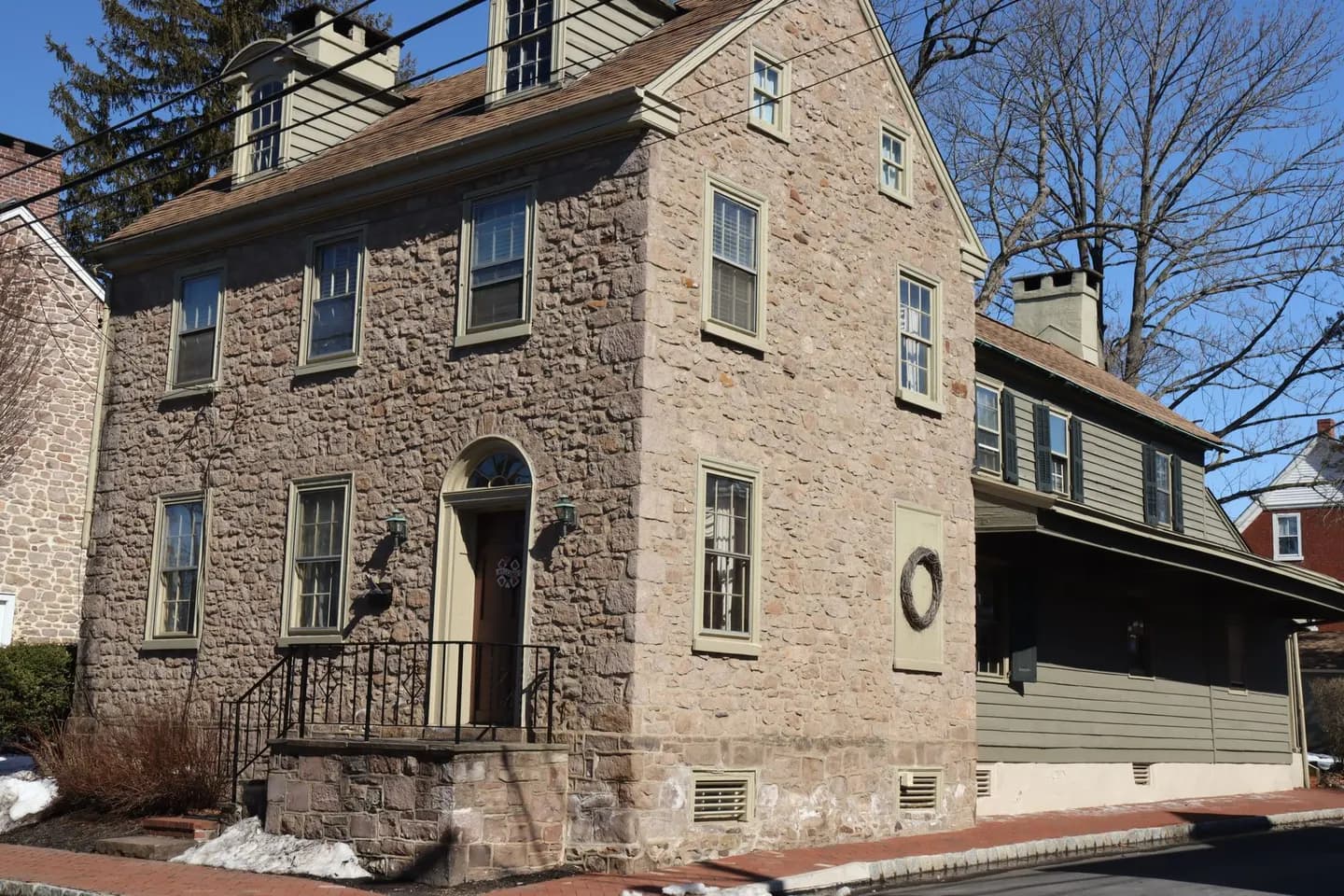
The 4 counties around Philadelphia (Montgomery, Bucks, Delaware and Chester) had 527,729 residents 65 and over on July 1, 2024, 19.7% of their combined population, according to the Census Bureau's Vintage 2024 estimates: Montgomery 173,884 (19.8%), Bucks 141,780 (21.8%), Delaware 107,161 (18.3%) and Chester 104,904 (18.7%). The homes run from pre-1940 boroughs in Delaware County, where 22% of units predate 1940, to Chester County developments with a median construction year in the 1980s. Contractors register with the Attorney General under HICPA, and the township or borough, not the county, issues the permit and licenses the trades. The projects that come up most are bathroom safety remodels, stair lifts and a covered, railed entry.
Ready to talk to a certified aging-in-place remodeler? Tell us about the house and get matched with a registered remodeler serving the Philadelphia suburbs.
The Philadelphia suburbs by the numbers
- 527,729 residents of Montgomery, Bucks, Delaware and Chester counties were 65 or older in July 2024, 19.7% combined, more than Allegheny and Philadelphia counties have put together (Census Bureau Vintage 2024 county estimates).
- Bucks County has the highest share at 21.8% (141,780 people); Montgomery has the largest count at 173,884 (19.8%) (same file).
- 22% of Delaware County housing units predate 1940 (ACS 2022 5-year estimates, via the Economy League of Greater Philadelphia), while Chester County's median construction year is in the 1980s, among the newest in the state (PHFA 2023 housing study, via Pennsylvania Realtors).
The homes here
Two kinds of house, one problem. In Delaware County's older boroughs, where 22% of homes predate 1940, the pattern is the pre-war one: steps at the door, narrow halls and doorways, the only full bath upstairs, and often knob-and-tube wiring and galvanized pipe behind the plaster. In Chester County and much of Bucks and Montgomery the stock is newer, with a 1980s median build year in Chester, but a 1980s two-story still puts the bedrooms and the full bath upstairs and the laundry in the basement. Either way, the stairs are the first question.
The newer houses give the remodeler more to work with: a wider hall, a first-floor powder room that can grow into a full bath, a garage entry that can go step-free. That is why the most common suburban project is the bathroom (curbless shower, grab bars, non-slip floor, comfort-height fixtures, under bathroom safety remodels), with a stair lift when the staircase becomes the problem. In the older boroughs the answer is more often a main-floor bedroom and bath. Winter applies everywhere: ice on stoops and sloped walks makes a covered, railed entry a frequent request; see ramps, entries and thresholds.
Licensing and permits in Montgomery, Bucks, Delaware and Chester counties
Pennsylvania has no statewide contractor license; any contractor doing at least $5,000 of home improvements a year registers with the Attorney General under HICPA, which also requires a written contract on jobs over $500 and caps the deposit at one-third on contracts over $5,000. The Pennsylvania state page has the lookup and the full rules.
The second layer is the municipality. The Uniform Construction Code is administered locally by more than 90% of Pennsylvania's 2,562 municipalities (Pennsylvania Housing Research Center), so the township or borough sets permit rules and fees, and plumbing and electrical licenses are municipal and do not transfer, so a plumber licensed in one township may not be licensed in the next. Ask every bidder who pulls the permit, where, and whether their electrician and plumber hold that municipality's license. The rules are different inside the city line; see the Philadelphia page. Our guide to choosing a remodeler has the full checklist.
Who pays
Most suburban families pay directly, from savings, home equity or siblings splitting the cost; see paying out of pocket. Original Medicare pays nothing toward modifications; some Medicare Advantage plans and many long-term care policies help, with limits (long-term care insurance). For Medicaid, ask the Department of Human Services, Office of Medical Assistance Programs, about coverage and waitlists (Medicaid waivers). Each of the 4 counties has its own Area Agency on Aging, which takes OPTIONS applications for residents 60 and over; call the Department of Aging at 717-783-1550 to be connected, or PA Link at 800-753-8827 for help with funding forms. The Pennsylvania Assistive Technology Foundation lends statewide for ramps, roll-in showers, widened doorways and stair glides, from $100 to $7,000 at 0% and above $7,000 at 3.75%.
Common projects in the Philadelphia suburbs
- Bathroom. Curbless shower conversion $2,500 to $9,000; a full aging-in-place bathroom $6,600 to $28,000, average near $11,000. Bathroom safety remodels.
- Stair lift. $3,000 to $20,000 installed, averages $7,000 to $8,000; a straight rail is far cheaper than a curved one. Stair lifts.
- Entry. Ramp $875 to $5,000, driven by length (1 foot per inch of rise) and material; a garage or side entry is often the shortest route to step-free. Ramps, entries and thresholds.
- Main-floor suite. Priced by whether a room and nearby plumbing already exist; cheapest when a first-floor powder room can be enlarged. Main-floor bedroom and bath.
The Philadelphia metro is union-heavy and labor likely runs above the national average, so get 3 written local quotes.
Ready to talk to a certified aging-in-place remodeler? Request a match and talk to a registered remodeler serving Montgomery, Bucks, Delaware and Chester counties.
Questions people ask
How many seniors live in the Philadelphia suburbs?
Montgomery, Bucks, Delaware and Chester counties together had 527,729 residents 65 and over in July 2024, 19.7% of their combined population, according to Census Bureau Vintage 2024 estimates. Bucks has the highest share at 21.8% and Montgomery the largest count at 173,884.
Which suburban county has the oldest homes?
Delaware County: 22% of its housing units predate 1940, according to ACS 2022 estimates via the Economy League. Chester County has some of the newest stock in the state, with a median construction year in the 1980s.
Who licenses contractors in Montgomery, Bucks, Delaware and Chester counties?
Pennsylvania has no statewide contractor license; contractors doing at least $5,000 of home improvements a year register with the Attorney General under HICPA. Permits come from the township or borough, because more than 90% of Pennsylvania municipalities administer the building code themselves.
What does an accessible bathroom cost in the Philadelphia suburbs?
National installed estimates run $2,500 to $9,000 for a curbless shower conversion and $6,600 to $28,000 for a full aging-in-place bathroom, average near $11,000. Labor in the Philadelphia area varies, so get 3 written local quotes.
Where do I start if my parent lives in Bucks or Chester County?
Each county has its own Area Agency on Aging. Call the Pennsylvania Department of Aging at 717-783-1550 to be connected to the right one, or PA Link at 800-753-8827 for help with funding forms.
Free, no obligation
Tell us about the home. We match you with a certified aging-in-place remodeler.
A few questions about your project. We never charge homeowners, and we never sell your information.