Oregon
Aging-in-Place Remodeling in Oregon: Homes, Licenses, Who Pays
Aging-in-place remodeling in Oregon: wet-season entries, old Portland stock, how to check a CCB license and bond, the ADRC line, local programs, and who pays.
Updated 2026-10-15. Reviewed against our editorial standards.
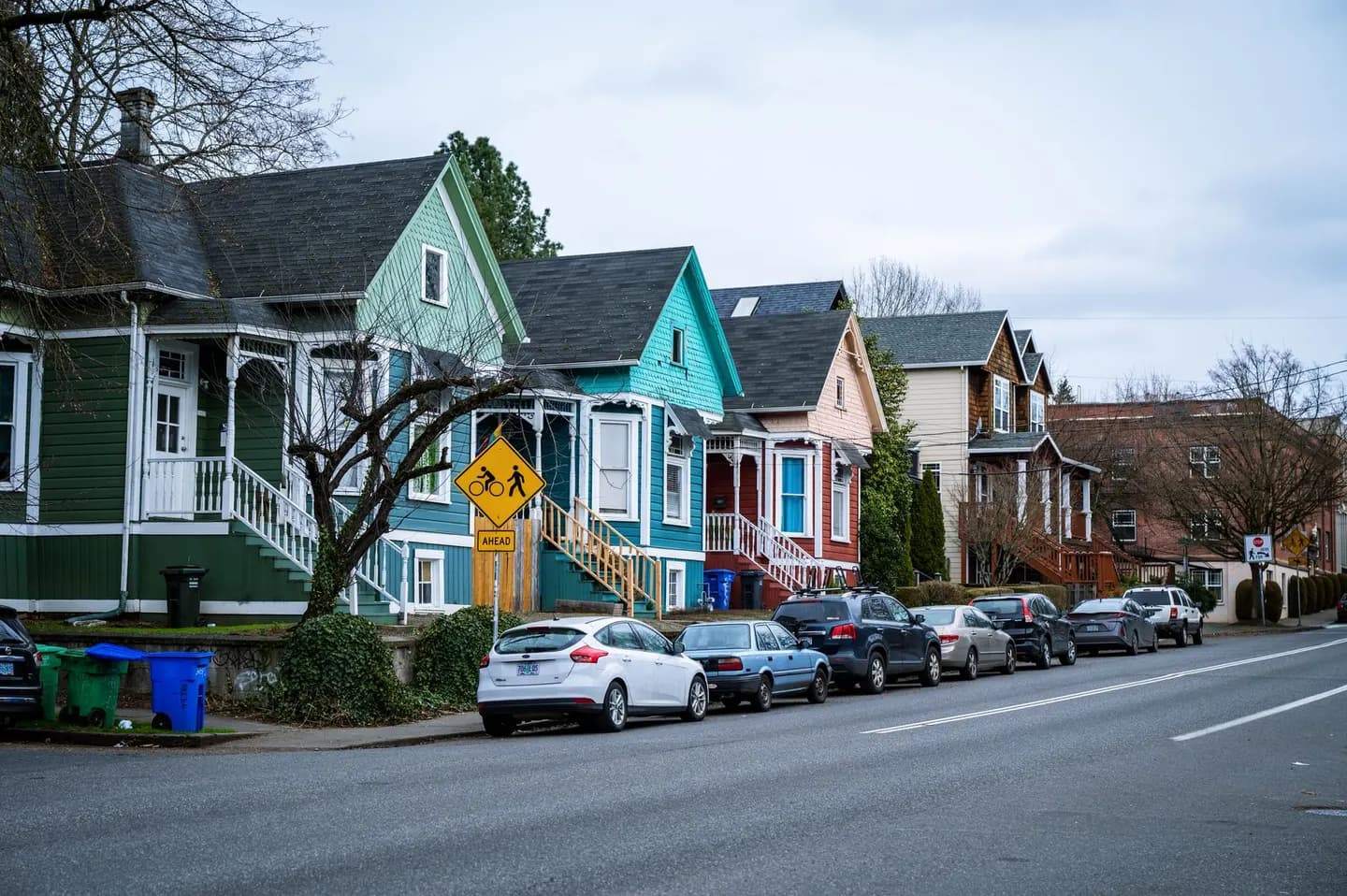
Oregon had 898,568 residents 65 and over on July 1, 2025, 21.0% of the state (Census Bureau Vintage 2025 estimates), a group that grew 12.4% in 5 years while the state grew only 0.7%. The typical house is old, with a median build year of 1981 statewide and 1966 in Portland (Census American Community Survey 2024 five-year estimates), so the work is stairs, basements and a wet-season entry as much as the bathroom. Contractors are licensed by the Oregon Construction Contractors Board (CCB), and only casual, minor work under $1,000 is exempt. Most Oregon families pay directly; Medicaid, Medicare Advantage, long-term care insurance, VA grants and a few local grants cover specific cases.
Ready to talk to a certified aging-in-place remodeler? Tell us about the home and get matched with a licensed remodeler serving your part of Oregon.
Oregon by the numbers
- 898,568 Oregonians were 65 or older on July 1, 2025, 21.0% of 4,273,586, up 98,815 or 12.4% since July 2020 (Census Bureau Vintage 2025 county estimates).
- Multnomah County (Portland) has 129,878 residents 65 and over, 16.3%; Washington County 101,024, up 18.3% since 2020; Clackamas County (Lake Oswego) 93,454, 21.9%; Lane County (Eugene) 89,132, 23.4% (same file).
- Jackson County (Medford, Ashland) is 25.7% residents 65 and over and Deschutes County (Bend) 23.1%; on the coast, Curry County is 40.0% and Lincoln County 34.6% (same file).
- Statewide, 7.1% of homes are mobile homes and 49.1% were built before 1990 (Census American Community Survey 2024 five-year estimates).
Why Oregon homes are different
Rain for 8 months. Portland Airport averages 36.03 inches of rain a year on 154.5 days (NOAA 1991 to 2020 normals). Wooden steps grow moss and stay slick from October to May, so a ramp or step-free entry needs a non-slip surface, drainage and a roof, with exterior railings that drain.
Old houses with stairs. Portland's median home was built in 1966 and 63.4% of its housing predates 1990 (Census American Community Survey 2024 five-year estimates). Narrow early-1900s houses with basement laundries, and West Hills and Lake Oswego hillside homes with daylight basements, are the stair-heavy cases. A stair lift or a main-floor bedroom and bath is the usual answer.
Earthquake country. Portland estimates more than 1,600 known or suspected unreinforced masonry buildings, fewer than 20% of them retrofitted or demolished (Portland Permitting and Development). Portland alone has prescriptive residential retrofit standards, usually bolting the house to its foundation and bracing the cripple walls (CCB); a basement remodel is the moment to ask.
Bend and the fire country. Deschutes County grew 6.8% from 2020 to 2025 (Census Bureau Vintage 2025 estimates) and Bend's median home dates from 2001 (Census American Community Survey 2024 five-year estimates), so its work is curbless showers and zero-step entries. Jackson County's housing is 9.6% mobile homes, and the 2020 Almeda fire destroyed 561 Phoenix homes, half of them mobile homes (KOBI-TV, 2023).
Checking an Oregon contractor's license
The Oregon Construction Contractors Board licenses contractors by endorsement. A Residential General Contractor runs any number of trades and carries a $25,000 bond and $500,000 of liability insurance; a Residential Specialty Contractor does 1 or 2 trades per job with a $20,000 bond and $300,000 of insurance; a Residential Limited Contractor is the handyman class, under $40,000 of gross sales a year and no contract over $5,000, with a $15,000 bond and $100,000 of insurance. Electricians and plumbers are licensed by the Building Codes Division (BCD). The exemption is narrow: casual, minor or inconsequential work priced under $1,000 (ORS 701.010), and anyone who advertises as a contractor loses it.
Look the contractor up at the CCB license search and confirm the endorsement is active on the day you sign. Oregon has no recovery fund. Your remedy is the bond, and it pays only on a court judgment or arbitration award the contractor fails to pay, after a CCB complaint filed within 1 year of substantial completion and a 30-day certified-mail notice. The full checklist is in how to choose an aging-in-place remodeler.
Who pays in Oregon
Most Oregon families pay directly, from savings, home equity or siblings splitting the cost: no pre-approval, your choice of contractor. Paying out of pocket covers the tools.
- Medicare and Medicare Advantage. Original Medicare pays nothing toward home modifications. Some Medicare Advantage plans add a bathroom safety allowance; structural work is rarely covered.
- Long-term care insurance. Many long-term care insurance policies include a capped home modification benefit, with pre-approval.
- Medicaid. Oregon's Medicaid program is the Oregon Health Plan, run by the Oregon Health Authority. Ask it what home modification coverage exists for someone who qualifies, and whether there is a waitlist.
- Veterans. The VA's HISA grant pays for medically necessary alterations prescribed by a VA clinician.
- Oregon and local programs. The state has no general homeowner repair program. Portland's Home Repair Grant Program funds about $900,000 a year of repairs, including aging-in-place modifications, for owner-occupants below 80% of area median income, through nonprofits such as Unlimited Choices and Rebuilding Together Pacific Northwest. Clackamas County makes accessibility grants of up to $7,500 for households under 80% of the county median, with a waiting list. Rebuilding Together Rogue Valley installs ramps free for households at or below 80% of area median income. Statewide, Northwest Access Fund lends up to $60,000 over 10 years for home modifications to people with disabilities.
The state unit on aging is the Oregon Department of Human Services Office of Aging and People with Disabilities (APD), which works through 16 Area Agencies on Aging. The statewide Aging and Disability Resource Connection (ADRC) line, 1-855-673-2372, routes you to the right one; the biggest are Multnomah County Aging, Disability and Veterans Services (503-988-3646), and Washington County Disability, Aging and Veteran Services (503-846-3060).
Where we work in Oregon
Lake Oswego. 23.5% of 40,381 residents are 65 or older (Census American Community Survey 2024 five-year estimates): 1982 hillside homes. See Lake Oswego.
Portland. 14.5% of 641,165 residents, inside Multnomah County's 129,878 residents 65 and over (Census Bureau Vintage 2025 estimates): basements and stairs. See Portland.
Bend. 18.1% of 103,390 residents, in Deschutes County, 23.1% (same sources): new single-story homes, snow and ice at the entry. See Bend.
Medford and Ashland. 19.5% of Medford's 86,315 residents and 29.9% of Ashland's 21,259, in Jackson County, 25.7% (same sources): retirees, manufactured homes and a fire rebuild. See Medford and Ashland.
Elsewhere in Oregon, request a match anyway; a certified aging-in-place remodeler serving your area will reach out once matched.
What it costs in Oregon
National installed ranges (2022 to 2026 estimates, not quotes): $2,500 to $9,000 for a curbless shower, $6,600 to $28,000 for a full accessible bathroom, $3,000 to $20,000 for a stair lift, $875 to $5,000 for a ramp. Oregon construction wages averaged $36.54 an hour against $31.42 nationally in May 2025 (Bureau of Labor Statistics), about 16% above, so local quotes will sit above the national ranges. Get 3 written local quotes and read the cost guide.
Ready to talk to a certified aging-in-place remodeler? Request a match and talk to a licensed remodeler serving your part of Oregon.
Cities and counties
Local guides for Oregon

Lake Oswego
Aging-in-place remodeling in Lake Oswego: 23.5% of residents are 65 and over, 1982 hillside homes, lifts and curbless baths, CCB license checks, and who pays.
Read the guide
Portland
Aging-in-place remodeling in Portland, OR: 1966-era houses with basements and stairs, the wet entry, CCB license checks, city grants, and who pays.
Read the guide
Bend
Aging-in-place remodeling in Bend, OR: 18.1% of residents are 65 and over, curbless showers, snow and ice at the entry, CCB license checks, and who pays.
Read the guide
Medford and Ashland
Aging-in-place remodeling in Medford and Ashland: Jackson County is 25.7% residents 65 and over, manufactured homes, ramps, CCB license checks, and who pays.
Read the guideQuestions people ask
How many seniors live in Oregon?
898,568 Oregonians were 65 or older on July 1, 2025, 21.0% of the state, according to the Census Bureau's Vintage 2025 estimates. That group grew 12.4% since 2020 while the state as a whole grew only 0.7%. Multnomah County has the most, 129,878.
Do I need a licensed contractor for an aging-in-place remodel in Oregon?
Yes, for almost any job. The Oregon Construction Contractors Board (CCB) licenses contractors, and the only exemption is casual, minor or inconsequential work where the whole price is under $1,000 (ORS 701.010). Anyone who advertises as a contractor loses that exemption. Electricians and plumbers are licensed separately by the Building Codes Division.
Does Oregon have a contractor recovery fund?
No. If a licensed contractor harms you, your remedy is the contractor's surety bond, $15,000 to $25,000 for residential endorsements, and the bond pays only on a court judgment or arbitration award the contractor fails to pay. File the CCB complaint within 1 year of substantial completion, after a 30-day certified-mail notice.
Does Medicaid pay for home modifications in Oregon?
Oregon's Medicaid program is the Oregon Health Plan, run by the Oregon Health Authority. Ask it what home modification coverage exists for someone who qualifies, and whether there is a waitlist. Most Oregon families pay directly.
Is there an Oregon program that helps pay for a ramp or walk-in shower?
Help is local and income-limited. Clackamas County makes accessibility grants of up to $7,500 for households under 80% of the county median income. Portland funds home repair grants, including aging-in-place modifications, for owners below 80% of area median income through nonprofit providers. Northwest Access Fund lends up to $60,000 over 10 years for home modifications to people with disabilities, including seniors. The Aging and Disability Resource Connection at 1-855-673-2372 is the place to ask.
What does aging-in-place remodeling cost in Oregon?
Oregon construction wages averaged $36.54 an hour against $31.42 nationally in May 2025 (Bureau of Labor Statistics), about 16% above, so expect local quotes to sit above the national ranges: $2,500 to $9,000 for a curbless shower, $6,600 to $28,000 for a full accessible bathroom, $3,000 to $20,000 for a stair lift, $875 to $5,000 for a ramp. Get 3 written local quotes.
Free, no obligation
Tell us about the home. We match you with a certified aging-in-place remodeler.
A few questions about your project. We never charge homeowners, and we never sell your information.