Guides
Home Modifications for Low Vision: Lighting, Contrast and Stairs
Home modifications for low vision: more light without glare, task lights at the stove, contrast on every step edge and the toilet seat, handrails on both sides.
Updated 2026-10-15. Reviewed against our editorial standards.
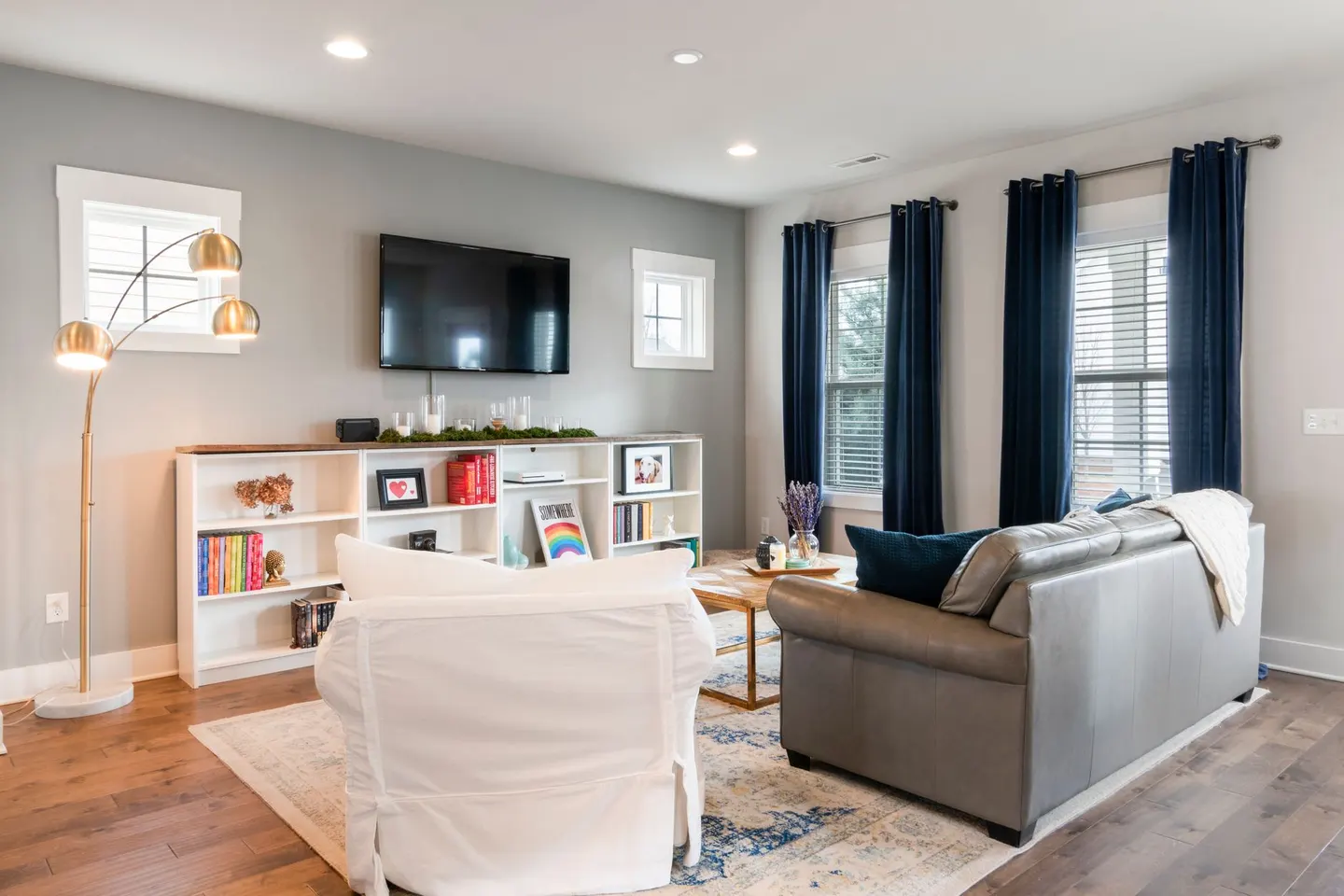
The home modifications that help most with low vision are light and contrast, not construction. More light, spread evenly with no glare, task lights at the stove, sink and reading chair, night lights on the route to the bathroom, a contrasting strip on the edge of every step and threshold, a toilet seat and grab bars that stand out from the wall, and matte floors that do not look wet. Then the structural fixes: a second handrail, a curbless shower, a level entry. This guide covers the house; for anything about the eyes, ask the eye doctor or the occupational therapist.
Ready to talk to a certified aging-in-place remodeler? Describe the rooms and the stairs that worry you and get matched with a remodeler serving your area.
Why the house needs to change
Each cause of low vision takes something different. Macular degeneration takes the center, so the stove dial blurs. Glaucoma takes the sides, so a step edge vanishes. Cataracts make lamps seem too bright and wash out colors. Diabetic retinopathy can swing from day to day. And older eyes need far more light: roughly three times as much at 60 as in the 20s, and an eye condition can double that again.
Lighting in plain English
Shop by lumens, not watts. Lumens measure brightness; watts measure power. An old 60-watt bulb is about 800 lumens; go up a size or two in every room, which LEDs make cheap to do. Color temperature is the Kelvin number on the box: lower is warmer, higher is cooler and whiter. For the kitchen, bathroom and reading chair, a neutral to cool white (about 3500K to 5000K) shows detail best for most people; keep the bedroom warmer.
Even light matters as much as bright light. Use several shaded lights in a room rather than one strong one, and keep the level similar from room to room, because older eyes adapt slowly, slowest going from bright to dim; dimmers ease the change at night. Task lights go close to the work, below eye level, aimed at the task and never at the face; under-cabinet strips over the counter and stove are the kitchen's task light.
Glare comes from a bulb you can see, a window in the line of sight, or a shiny surface: shade every bulb, hang adjustable blinds, swap glossy for matte. Motion-sensor lights in the hall and bathroom come on before the hand finds the switch; night lights cover the route from bed to toilet.
Contrast: where to put it, what to avoid
Low vision reads contrast, not detail. Light on dark or dark on light: a dark switch plate on a pale wall, door frames painted to stand out, baseboards that differ from wall and floor, a dark toilet seat on a white toilet, grab bars in a color or wrapped in contrasting tape, and a strip on the edge of every step and threshold. Avoid busy patterns and floors that match the walls; aim for one solid floor color with a visible edge at the wall.
The stairs
| Fix | What it means |
|---|---|
| Contrast strips | Light-on-dark or dark-on-light, on the nosing of every tread |
| Handrails both sides | Round enough to grip, continuous, extending past the top and bottom step, returning to the wall |
| Light top and bottom | A fixture and a glow switch at each end, left on at night |
| A signal at the end | A contrasting non-slip mat at the bottom so the last step is not a surprise |
Public-building standards put rails on both sides and run the top rail about 12 inches past the landing; most houses have one rail that stops at the last step, so ask for the two-rail, extended version. If the stairs still feel unsafe, a stair lift is next.
The bathroom and the kitchen
In the bathroom: more light over the tub and shower, a non-slip surface in it, grab bars at the toilet and in the shower, a contrasting seat and mats. A curbless shower removes the edge the person cannot see; the conversion runs $2,500 to $9,000 in national estimates from 2022 to 2026 secondary sources, so get local quotes.
In the kitchen: mark the stove and microwave dials with contrasting dots or raised stickers, keep everyday items at waist height, and light the work surface. An induction cooktop heats the pan rather than the glass, so there is no flame or glowing coil to misjudge; more is on the kitchen modifications page.
Glare and floors
A glossy floor reflects the window and reads as wet or as a change in level. Choose matte, non-slip flooring in one calm color, never wax it, remove loose rugs, and make every threshold flush. The polished tile in many Florida homes glares and is slick when damp.
The team, who pays, and mistakes
Start with the eye doctor and ask for low vision rehabilitation. A Certified Low Vision Therapist measures how the person sees, including contrast sensitivity, and teaches lighting and contrast at home; an occupational therapist with low vision training marks the spots for bars and lights. A Certified Aging-in-Place Specialist (CAPS) remodeler turns that list into a quoted plan, starting with a whole-home safety assessment.
Most families pay directly, the fastest route; paying out of pocket explains the tools. Original Medicare does not pay for home modifications, and some Medicare Advantage plans add only a small bathroom safety allowance; see Medicare and Medicare Advantage. Long-term care insurance may cover modifications with pre-approval and a clinician's letter.
The mistakes we see: one bare bulb instead of several shaded ones, glossy paint, a patterned rug "to warn about the step", a white grab bar on white tile. Our room-by-room checklist covers the rest of the house; if memory loss is also in the picture, read home modifications for memory loss too.
Ready to talk to a certified aging-in-place remodeler? Tell us about the stairs, the bathroom and the lighting, and get matched with a remodeler serving your area.
Questions people ask
What home changes help most for someone with low vision?
More light, spread evenly with no bare bulbs or dark corners, task lights at the stove, sink and reading chair, night lights from bed to bathroom, and strong contrast at the edge of every step, the toilet seat and the grab bars. Those come before any construction.
What kind of light bulb is best for macular degeneration?
Shop by lumens, not watts, and go brighter than the old bulb. For work areas, a neutral to cool white (about 3500K to 5000K) helps most people see detail; a warmer bulb suits the bedroom. Ask the low vision specialist what works for the person, because preferences differ.
How do I make stairs safer for a parent who cannot see the steps?
Mark the edge of every tread with a contrasting strip, put a light and a switch at both the top and the bottom, and install a handrail on both sides that runs past the top and bottom step. A stair lift is the next step if the stairs still feel unsafe.
Is an induction cooktop safer for someone with low vision?
Often, yes. Induction heats the pan rather than the glass surface, so there is no flame or glowing coil to misjudge, and the surface is not hot to the touch without a pot on it. Marking the dials with contrasting dots is the cheaper first step.
Who pays for home modifications for low vision?
Most families pay directly. Original Medicare does not pay for home modifications; some Medicare Advantage plans include a small bathroom safety allowance; long-term care insurance may cover modifications with pre-approval and a clinician's documentation; and state Medicaid waivers help some people who qualify.
Who should look at the house first?
Ask the eye doctor for a referral to a low vision specialist or an occupational therapist with low vision training, who can measure how the person sees and mark what to change. A Certified Aging-in-Place Specialist then turns that list into a quoted plan.
Free, no obligation
Tell us about the home. We match you with a certified aging-in-place remodeler.
A few questions about your project. We never charge homeowners, and we never sell your information.