Guides
Walk-In Shower vs Walk-In Tub: Which Is Right for an Older Parent
For most unsteady parents a curbless shower with a seat beats a walk-in tub on safety, cost and time. When the tub wins, what each costs and what to ask the OT.
Updated 2026-10-15. Reviewed against our editorial standards.
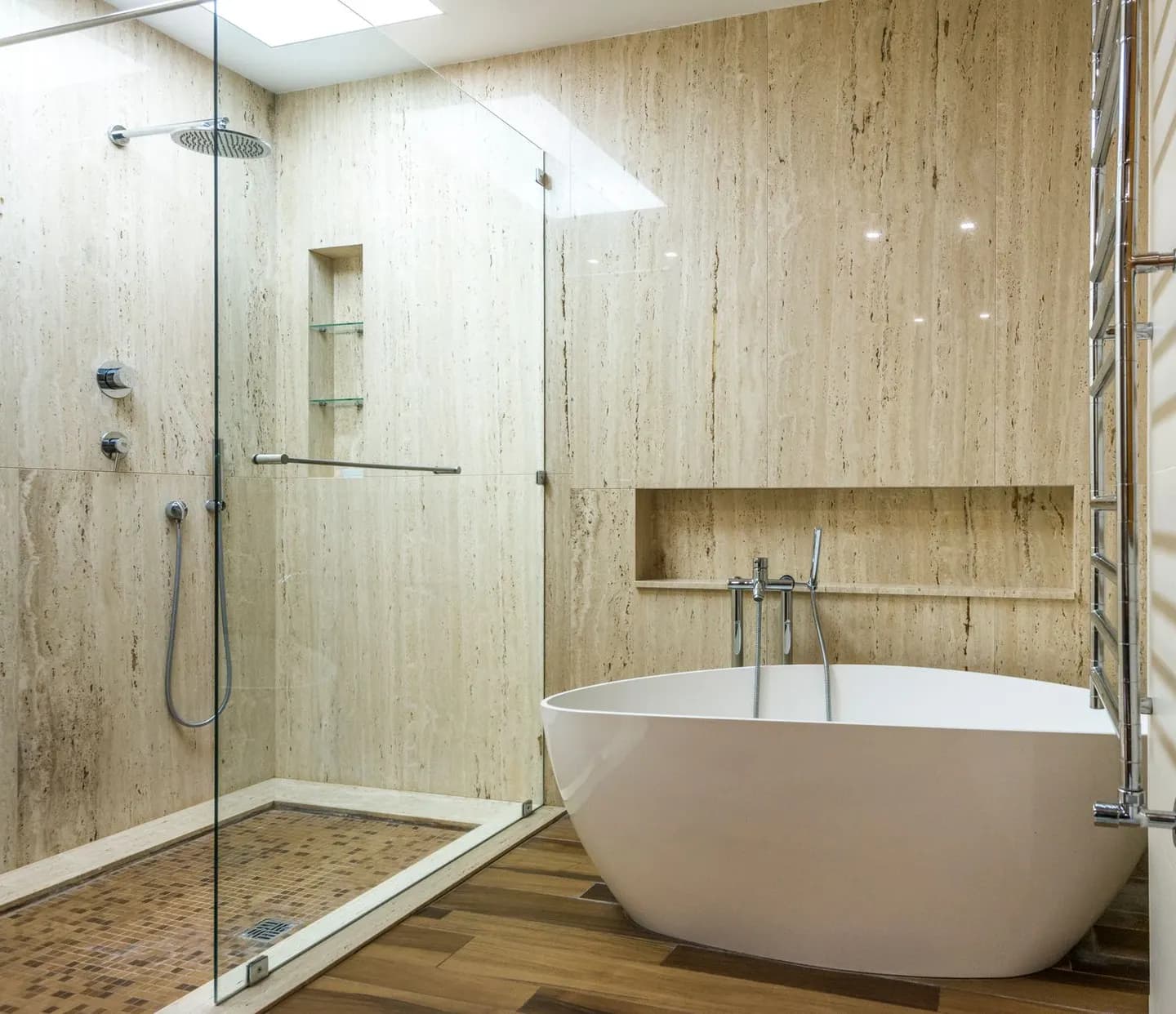
For most older parents who are unsteady or use a walker, a curbless walk-in shower with a fold-down seat, grab bars and a handheld sprayer is the safer, cheaper and more flexible choice: no door, no waiting inside while water fills or drains, room for a caregiver, and it still works if a wheelchair comes later. A walk-in tub suits a narrower group: someone who soaks for pain or stiff joints, can step over the threshold onto the seat, and can sit through the fill and the drain. Either way, get an occupational therapist's opinion before anyone sells you anything.
Ready to talk to a certified aging-in-place remodeler? Tell us about the bathroom and get matched with a bathroom safety remodeler serving your area.
The short comparison
| Curbless walk-in shower | Walk-in tub | |
|---|---|---|
| Entry | Flush floor; a walker or shower wheelchair rolls in | A low threshold through a side door, then down onto a seat |
| Fall risk | Seated, non-slip floor, grab bars, no transfer | No tub wall to climb, but a door, a latch and a transfer |
| Time | Bathe and get out | Sit inside while it fills and while it drains |
| Water and heater | About 2.5 gallons a minute; no change to the heater | Roughly 40 to 50 gallons to fill; at least a 50-gallon tank |
| Resale | The conventional finish | A niche fixture; fine if a standard tub stays elsewhere |
| Installed cost (national estimates) | Curbless conversion $2,500 to $9,000; full package $3,000 to $15,000 | $3,000 to $15,000, average near $5,000; up to $25,000 with jets |
| Who pays | Out of pocket; long-term care insurance often covers it | Out of pocket; long-term care insurance rarely covers tubs |
All prices are national estimates from 2022 to 2026 secondary sources. Get local quotes.
Why the shower wins for most people
Bathrooms are where many falls at home happen, and the causes repeat: a wet floor, a lip to step over, nothing solid to hold, and standing up on tired legs. A curbless shower takes all four away. The floor slopes to a drain with no curb, a fold-down bench and a handheld sprayer let the whole wash happen sitting down, and grab bars at the entry and the seat give something to hold. A caregiver can step in, and if a walker becomes a wheelchair, a roll-in version still works; a tub cannot without a transfer onto its seat.
When a walk-in tub is the right call
A walk-in tub does one thing a shower cannot: a seated soak in warm water. The Arthritis Foundation describes warm soaking as a long-used way to relax stiff joints, with the most benefit after about 20 minutes. If your parent can step over the threshold, lower onto the seat, work the latch and wait calmly through the fill and drain, a walk-in tub is a fair choice. Ask the occupational therapist or doctor first; the Foundation warns against water that is too hot for people with heart problems. It is a poor fit for someone who gets cold quickly, needs a caregiver in the shower, or finds a new routine confusing; see home modifications for a parent with memory loss.
Questions to ask the occupational therapist
In a home evaluation the therapist watches how your parent bathes today and writes down what the bathroom needs. Ask:
- Can my parent step over a tub threshold and lower onto a seat today, and in 2 years?
- Is a walker or wheelchair likely, and does that mean a roll-in shower?
- Can they sit through a fill and a drain without getting cold or anxious, and open the latch?
- Does soaking help their pain enough to justify a tub, and is hot water safe for them?
- Which side is weaker, and exactly where do the grab bars, the seat and the sprayer go?
- Will you write it down? The insurer, the VA and the remodeler all work from that note.
A whole-home safety assessment turns that note into a quoted plan.
Who pays
Most families pay directly, the fastest route: no pre-approval and your choice of contractor. Paying out of pocket covers the tools. Original Medicare pays for neither, because they are part of the house rather than medical equipment; some Advantage plans add a small bathroom safety allowance, explained in Medicare and Medicare Advantage. Long-term care insurance often covers a walk-in shower and grab bars with pre-approval and a clinician's note, but not reliably a tub. The ads promising a program that pays for everything: see senior bathroom remodel programs.
The 3 mistakes families make
Buying from a TV ad before a home assessment. Walk-in tubs are sold hard, often at home with a "today only" price; complaints about lost deposits and high-interest financing follow. Federal law gives you 3 business days to cancel a sale signed at home, but the better order is the OT's note, then 3 written quotes; see our guide to choosing an aging-in-place remodeler.
Forgetting the water heater. A 40-gallon tank cannot fill a walk-in tub warm; Boca Raton's building department asks for the heater size in the permit package for this reason. Have the quote list the heater, any new circuit and the permit as separate lines.
The wrong door for the room. An outward door needs clear floor in front of the tub and will hit a toilet or vanity in a tight bathroom. An inward door is held shut by the water, so nobody gets out until the tub is empty, and a wheelchair transfer is harder. Measure the room with the installer before choosing.
Ready to talk to a certified aging-in-place remodeler? Describe the bathroom and your parent, and get matched with a remodeler serving your area.
Questions people ask
Is a walk-in shower or a walk-in tub better for an elderly parent?
For a parent who is unsteady or uses a walker, a curbless shower with a fold-down seat, grab bars and a handheld sprayer is usually safer, cheaper and quicker to use, and it still works if a wheelchair comes later. A walk-in tub fits someone who soaks for pain, can step over the threshold onto the seat, and can sit through the fill and drain. Ask the occupational therapist before you buy either.
Which is cheaper, a walk-in shower or a walk-in tub?
National estimates from 2022 to 2026 sources put a curbless shower conversion at $2,500 to $9,000 and a walk-in tub at $3,000 to $15,000 installed, with premium tubs reaching $25,000. A tub often adds a water heater upgrade and a new electrical circuit on top. Get 3 local quotes for each.
Does a walk-in tub need a bigger water heater?
Often. A regular walk-in tub takes roughly 40 to 50 gallons to fill with a person in it, and a Florida building department's guidance recommends at least a 50-gallon tank, because a tank heater only delivers about 70 percent of its volume as hot water. A seated shower needs no change to the heater.
How long does a walk-in tub take to fill and drain?
It depends on the home's water pressure and drain. Manufacturers' own figures run from under 2 minutes on fast-drain models to 6 to 15 minutes on an average tub, and the door cannot open until the tub is empty. Ask the installer to run a full fill and drain in the home before you accept the job.
Does Medicare pay for a walk-in tub or a walk-in shower?
Original Medicare pays for neither, because they are part of the house rather than durable medical equipment like a walker or a commode. Some Medicare Advantage plans add a small bathroom safety allowance for items like grab bars and shower stools; the plan's Summary of Benefits is the only authority.
Will a walk-in tub or a walk-in shower hurt resale?
Either is roughly neutral as long as the house keeps one standard bathtub somewhere, which young families and appraisers look for. A curbless shower is the more conventional finish for the next buyer; a walk-in tub is a niche fixture some buyers would remove.
Free, no obligation
Tell us about the home. We match you with a certified aging-in-place remodeler.
A few questions about your project. We never charge homeowners, and we never sell your information.